Certification Pathways for Preserving Transaction Integrity in Advancing Retail Payment Systems
Written by Xander Patterson · Aug 11, 2026
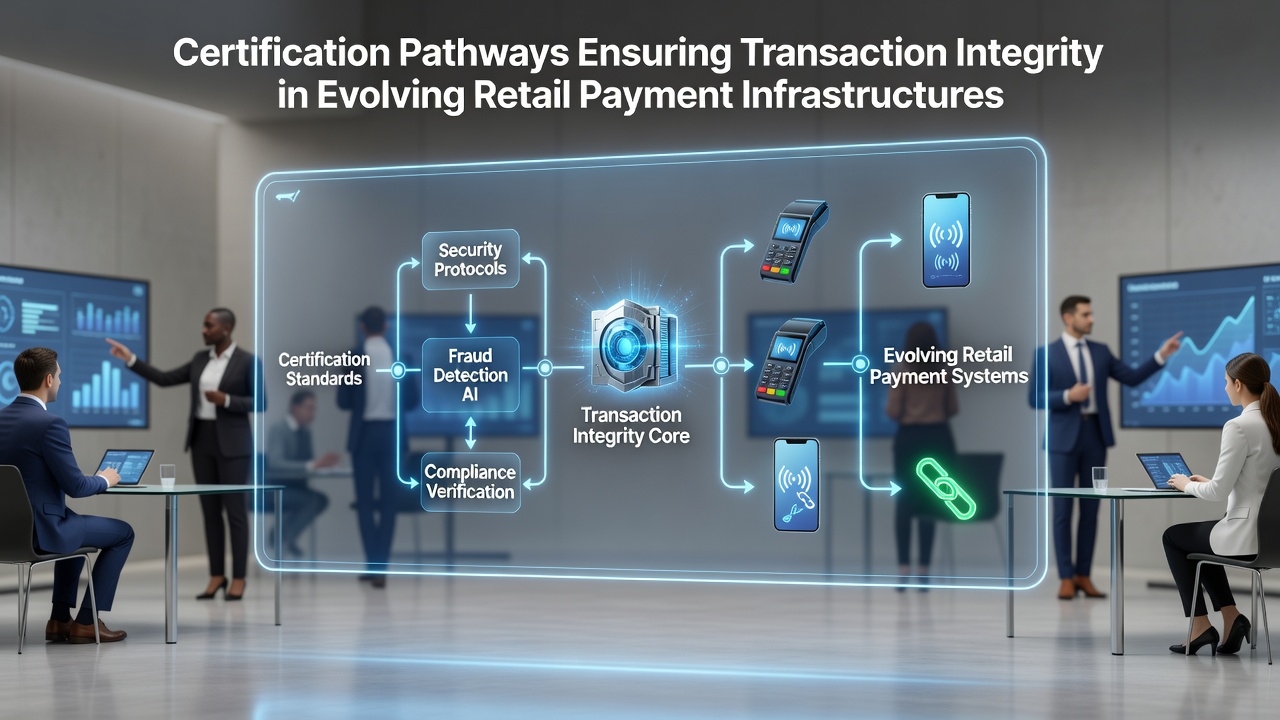
Certification Pathways for Preserving Transaction Integrity in Advancing Retail Payment Systems
Retail payment infrastructures have expanded through layered technologies that connect in-store terminals with cloud-based processing hubs, and certification pathways now serve as structured routes that verify each layer meets integrity requirements before transactions flow at scale. These pathways incorporate standards from multiple organizations, and they require ongoing validation because payment volumes continue to rise in both physical and digital channels.
Core Certification Frameworks in Retail Payments
Payment Card Industry Data Security Standard certification remains central because it outlines controls for protecting cardholder data across merchant environments, acquirers, and service providers, while EMVCo specifications govern chip and contactless authentication protocols that reduce counterfeit risks during authorization sequences. Observers note that merchants pursuing Level 1 PCI DSS compliance must complete annual on-site assessments conducted by qualified security assessors, and those assessments examine network segmentation, encryption practices, and access controls in detail.
ISO 27001 certification adds an information security management layer that many payment processors adopt alongside PCI requirements, and this standard emphasizes risk assessment cycles plus continuous improvement plans that adapt to emerging threats in evolving infrastructures. Data from regulatory bodies shows that certified entities report fewer incidents of unauthorized access when they maintain documented incident response procedures integrated with their certification renewal schedules.
Regional Regulatory Influences on Certification Routes
European Central Bank guidelines shape certification expectations for payment service providers operating within the Single Euro Payments Area, and these guidelines stress strong customer authentication measures that align with revised Payment Services Directive requirements. In parallel, the Federal Reserve in the United States publishes security expectations for retail payment systems that encourage certification through bodies such as the PCI Security Standards Council, while Australian regulators through the Australian Prudential Regulation Authority incorporate similar integrity checks for entities handling high-volume card transactions.
Certification timelines typically span several months because assessors review documentation, conduct interviews, and perform vulnerability scans before issuing reports, yet renewal cycles force organizations to demonstrate sustained control effectiveness rather than one-time compliance. Research indicates that entities completing these pathways experience smoother integration with card networks because processors prioritize certified partners during onboarding reviews.
Adaptations for Mobile and Omnichannel Retail Environments
Mobile point-of-sale devices introduce additional certification considerations because they combine hardware security modules with software that processes payments in real time, and certification bodies now evaluate both device tamper resistance and application-level encryption before granting approvals. One study revealed that merchants who aligned their mobile terminal certifications with existing PCI and EMV pathways reduced authorization declines related to security flags during peak retail periods.
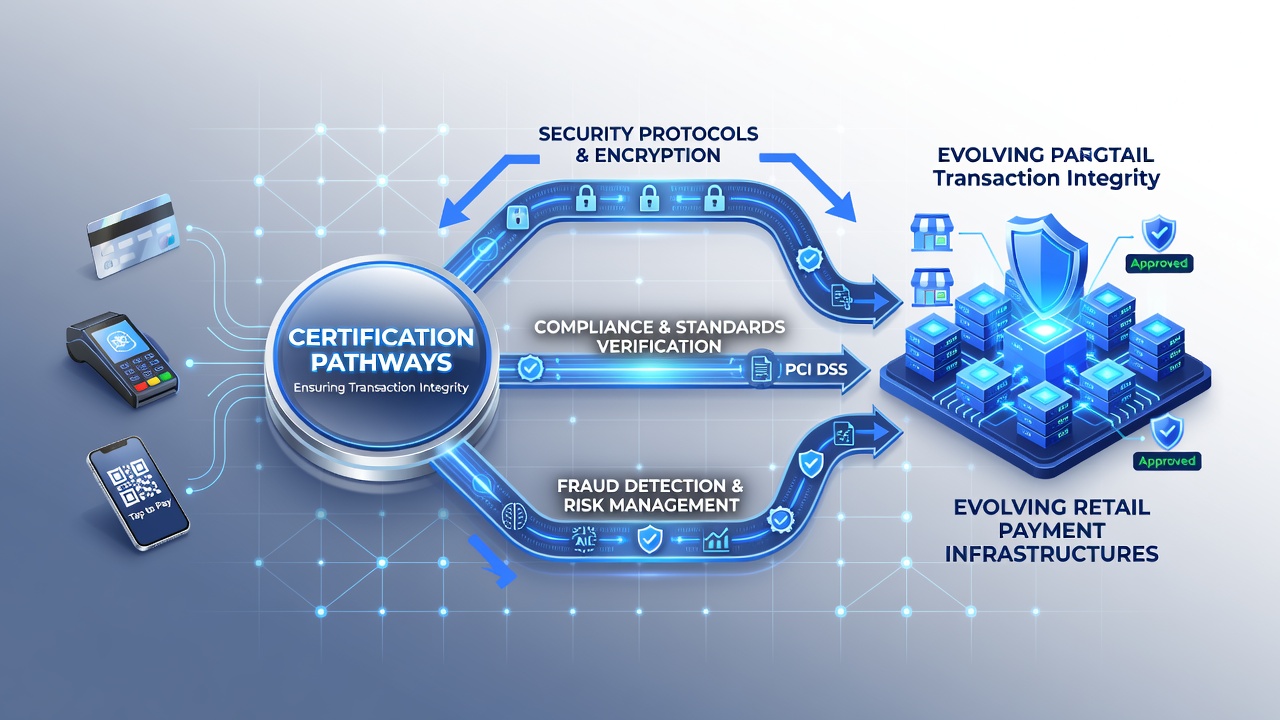
Cloud service providers supporting retail payment platforms pursue SOC 2 Type II reports that supplement traditional certifications, and these reports detail controls over security, availability, and confidentiality across extended periods rather than point-in-time snapshots. As of August 2026, updates to several certification frameworks have incorporated explicit requirements for monitoring machine-to-machine communications that occur during subscription renewals and recurring billing flows common in omnichannel retail.
Practical Steps Along Certification Pathways
Organizations typically begin with gap analyses that map current controls against target standards, and they then implement remediation measures such as updated key management procedures or enhanced logging mechanisms before scheduling formal assessments. Training programs for staff form part of the pathway because certification auditors verify that personnel understand their roles in maintaining transaction integrity during daily operations.
Third-party vendors that handle payment data on behalf of retailers must also achieve appropriate certifications, and acquirers often require evidence of these certifications before allowing data sharing agreements to proceed. Figures reveal that coordinated certification across merchant, processor, and vendor layers correlates with lower rates of transaction disputes in blended retail operations that combine in-store and online channels.
Conclusion
Certification pathways continue to provide structured mechanisms that verify transaction integrity as retail payment infrastructures incorporate new device types, connectivity options, and processing models. Entities that navigate these pathways maintain documented evidence of controls that support both regulatory expectations and network participation requirements. Ongoing renewals ensure that adaptations keep pace with infrastructure changes while preserving the core objective of secure, reliable transaction flows across retail environments.