Deposit Profiles: Foundations for Stable Charge Cycles in Mobile Retail via Authorization Integration
Written by Drew Schmid · Jun 7, 2026
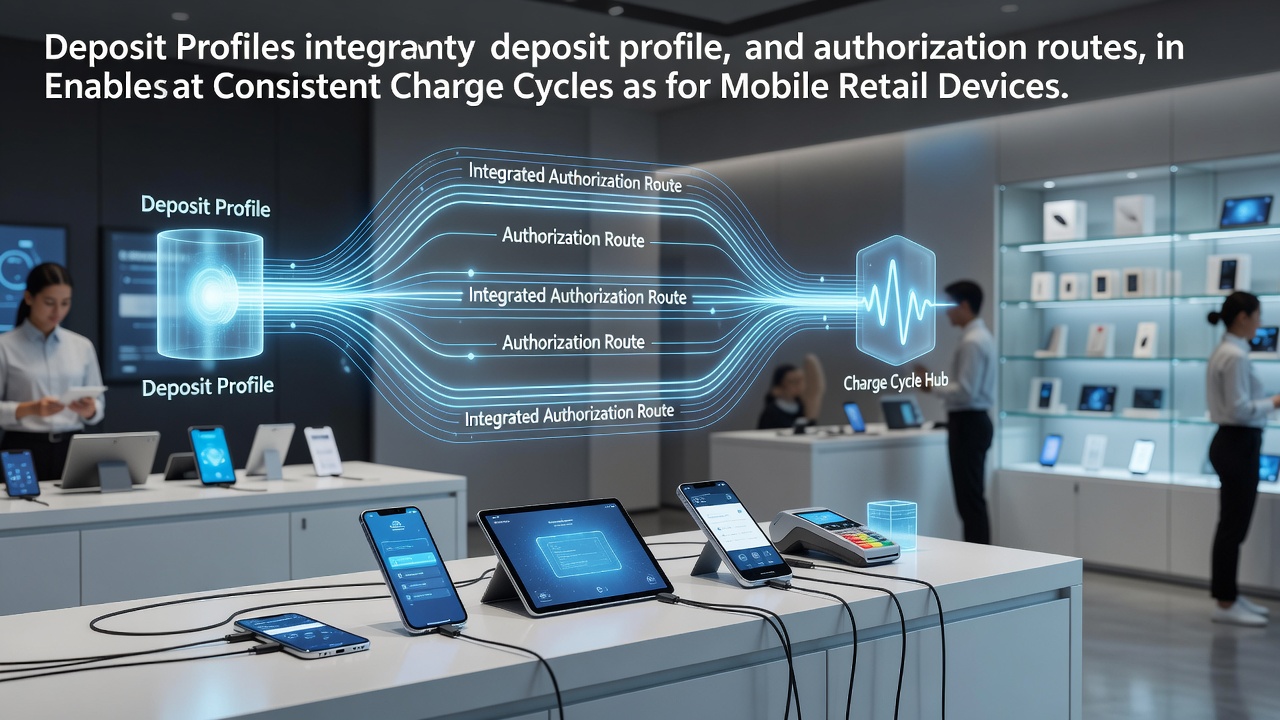
Deposit Profiles: Foundations for Stable Charge Cycles in Mobile Retail via Authorization Integration
Deposit profiles function as structured data frameworks that store predefined authorization parameters for retail transactions, allowing mobile devices such as handheld terminals and tablets to execute recurring charges without repeated full verifications. These profiles integrate directly with payment gateways through standardized routes that link merchant accounts to card networks, ensuring each charge cycle draws from an established balance or hold rather than initiating fresh inquiries every time. In practice, a deposit profile captures initial authorization details including amount limits, validity periods, and merchant identifiers, which then route through integrated systems to maintain continuity across multiple billing events.
Core Components of Deposit Profiles in Retail Systems
Retail operators configure deposit profiles by entering customer account data and linking it to specific authorization sequences, a process that begins with an initial verification request sent along dedicated API pathways. Once established, the profile maintains a running record of available funds or credit holds, which mobile devices access during subsequent charge attempts. This setup reduces latency because the system references the stored profile instead of querying external networks repeatedly, and data from payment processors shows that such configurations handle thousands of cycles per device monthly without interruption. Observers note that profiles often include rules for partial releases or incremental deductions, which align with variable retail needs like subscription add-ons or usage-based fees.
Authorization Routes and Their Integration Pathways
Integrated authorization routes connect deposit profiles to broader card networks by establishing persistent channels that carry encrypted tokens rather than raw card details. Mobile retail devices initiate these routes through secure handshakes with cloud-based processors, where the profile data travels alongside transaction metadata to confirm availability before settlement occurs. Research from payment industry reports indicates that these routes incorporate fallback mechanisms, allowing switches between primary and secondary networks if one path experiences delays, and this redundancy supports consistent cycles even during peak retail periods. Those who manage large fleets of portable terminals find that route mapping within the profile itself directs traffic efficiently, preventing bottlenecks that could otherwise disrupt recurring billing flows.
Operational Flow in Mobile Retail Environments
When a mobile device processes a charge, it first retrieves the relevant deposit profile from its local cache or a synchronized server, then packages the request with route identifiers that specify the exact sequence of banks and processors involved. The authorization travels along the integrated path, receives approval or decline signals, and updates the profile balance in real time, all within milliseconds. Figures from network operators reveal that devices equipped with these profiles complete cycles at rates exceeding 99 percent success in controlled tests conducted through 2025, with projections extending into June 2026 showing further gains as route optimization algorithms mature. This flow accommodates both online and offline modes, where profiles store temporary holds that reconcile once connectivity returns.

Handling Variability Across Retail Scenarios
Retail environments often present fluctuating transaction volumes, yet deposit profiles adapt by incorporating dynamic thresholds that adjust authorization amounts based on historical patterns stored within the profile. For instance, a profile tied to a subscription service might reserve a base amount while permitting small overages routed through secondary verification steps, ensuring charges proceed without customer intervention. Studies from institutions such as the Federal Reserve document how these adaptations maintain cycle consistency across blended in-store and remote retail operations. Profiles also support multi-currency routing when linked to international merchant accounts, converting holds at prevailing rates before final settlement.
Security and Compliance Elements
Each deposit profile embeds encryption keys and access controls that travel with authorization requests, shielding sensitive data as it moves along integrated routes. Compliance frameworks require periodic profile audits, which mobile systems perform automatically by cross-checking stored values against network records. Data compiled by the European Central Bank highlights reduced exposure to certain fraud vectors when profiles enforce route-specific validations, and similar patterns appear in reports from the Australian Payments Network covering regional deployments. Devices refresh profile tokens at set intervals, aligning with evolving security standards that take effect around June 2026.
Implementation Examples Across Retail Sectors
One deployment in grocery chains uses deposit profiles on tablet-based checkouts to manage recurring loyalty program charges, where the integrated route pulls from customer-linked accounts without re-entering card information. Another case involves field service operations that equip technicians with mobile readers preloaded with profiles for equipment rental cycles, routing authorizations through merchant-specific pathways that update balances after each use. These setups demonstrate how profiles scale from single-device operations to enterprise networks handling distributed retail points.
Conclusion
Deposit profiles combined with integrated authorization routes establish reliable mechanisms for sustaining charge cycles on mobile retail devices by centralizing verification data and streamlining network interactions. As retail continues to adopt portable systems, the structured approach outlined here supports ongoing operational stability across diverse transaction environments.