Flow Architects: Engineering Credit Card Processing for Uninterrupted Recurring Payments in Portable Retail
Written by Felix Meier · Jun 21, 2026
Flow Architects: Engineering Credit Card Processing for Uninterrupted Recurring Payments in Portable Retail
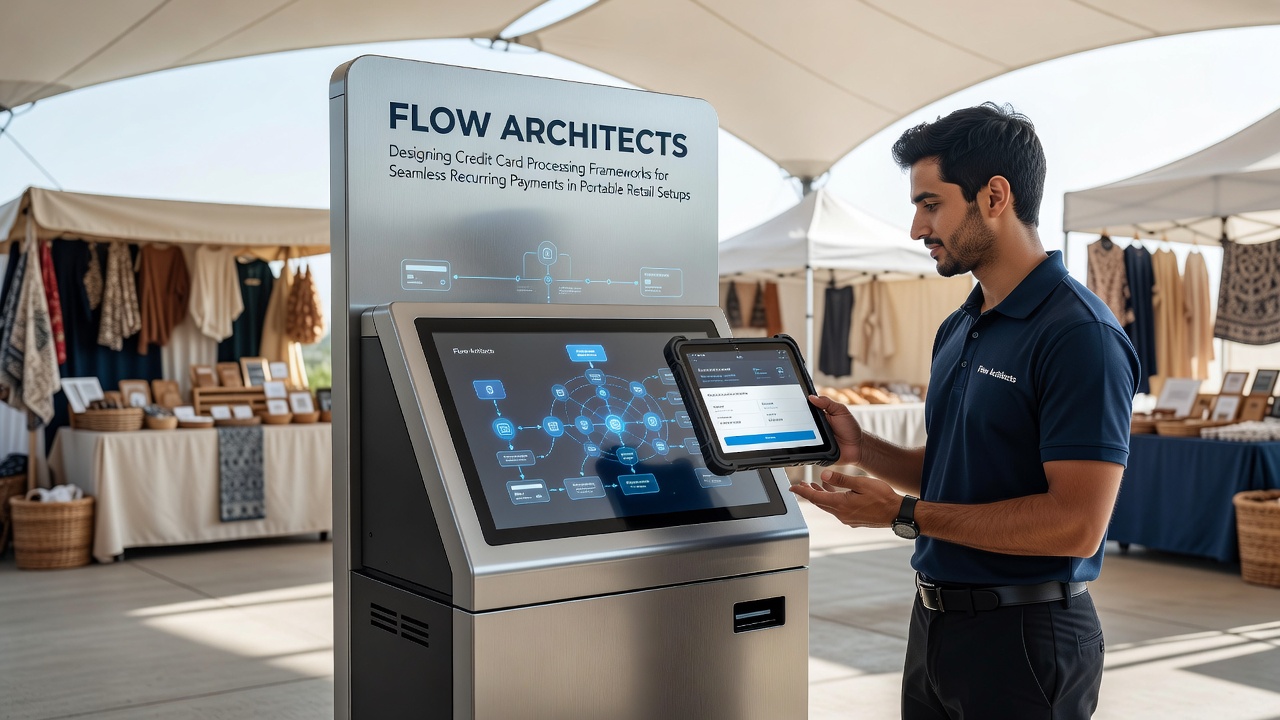
Flow architects specialize in constructing credit card processing frameworks that maintain continuity for recurring payments within portable retail environments, where devices move between locations yet still require stable authorization cycles and settlement processes. These professionals map transaction pathways from initial card capture on handheld terminals through to backend merchant accounts, ensuring each recurring charge aligns with established billing intervals without interruption from network variability or device mobility.
Portable retail setups rely on wireless connections that shift between cellular towers and local Wi-Fi networks, so frameworks must incorporate fallback routing that preserves authorization sequences. Research from the European Central Bank indicates that transaction success rates improve when systems include real-time endpoint verification combined with stored credential tokens, allowing charges to proceed even during brief signal disruptions.
Core Elements of Framework Design
Design begins with defining data structures for deposit profiles that store encrypted card details alongside recurring schedule parameters. These profiles connect directly to payment gateways, where tokenization replaces sensitive account numbers before transmission occurs across public networks. Flow architects then layer in merchant account configurations that segment transaction types, separating one-time purchases from subscription renewals so reconciliation processes remain accurate across daily batch settlements.
Authorization flows incorporate multiple checkpoints that verify available credit, confirm merchant category codes, and apply fraud scoring algorithms before funds move. In portable setups the sequence extends to include device location metadata and session identifiers, which help maintain continuity when a terminal reconnects after roaming between coverage zones.
Integration With Mobile Hardware and Cloud Services
Hardware integration requires APIs that translate terminal commands into standardized ISO 8583 messages accepted by card networks. Cloud-based orchestration services receive these messages, match them against active subscription records, and trigger subsequent charges on predetermined dates. Observers note that successful implementations often use message queuing systems to buffer requests during connectivity gaps, releasing them automatically once stable links return.
June 2026 marks an expansion period for these frameworks, as updated specifications from the PCI Security Standards Council introduce enhanced token lifecycle management rules that affect how portable devices rotate credentials. Systems designed with modular components allow operators to adopt these updates through configuration changes rather than full hardware replacements.
Handling Foreign Exchange and Multi-Currency Renewals
When portable retail operations span regions, frameworks route foreign exchange movements through merchant account structures that apply real-time conversion rates at authorization time. This approach keeps recurring charges consistent in the customer's billing currency while merchants receive funds in their settlement currency. Data from the Reserve Bank of Australia shows that frameworks incorporating daily rate synchronization reduce disputes arising from currency fluctuations during subscription cycles.
Flow architects also embed retry logic that distinguishes between soft declines, such as temporary holds, and hard declines requiring customer intervention. Automated sequences attempt secondary acquirers or adjusted amounts before notifying account holders, thereby preserving revenue streams in mobile environments where manual follow-up proves impractical.
Security and Compliance Layers
Security protocols embed within the framework architecture through end-to-end encryption and point-to-point tokenization that never exposes full card numbers on the portable device itself. Compliance checks run continuously against evolving regulatory requirements, logging each authorization event with timestamps and device identifiers for audit trails. Those who manage these systems report that centralized policy engines simplify adherence across multiple jurisdictions without requiring separate code branches for each region.
Conclusion
Flow architects continue refining credit card processing frameworks that support recurring payments across portable retail channels by focusing on resilient routing, token management, and modular integration points. These designs enable operators to maintain billing continuity regardless of device movement or network conditions while meeting technical standards that evolve through 2026 and beyond.