Fractal Flows: Dissecting the Layered Connections Between POS Terminals and Recurring Billing Engines in Merchant Account Frameworks
Written by Drew Schmid · Aug 21, 2026
Fractal Flows: Dissecting the Layered Connections Between POS Terminals and Recurring Billing Engines in Merchant Account Frameworks
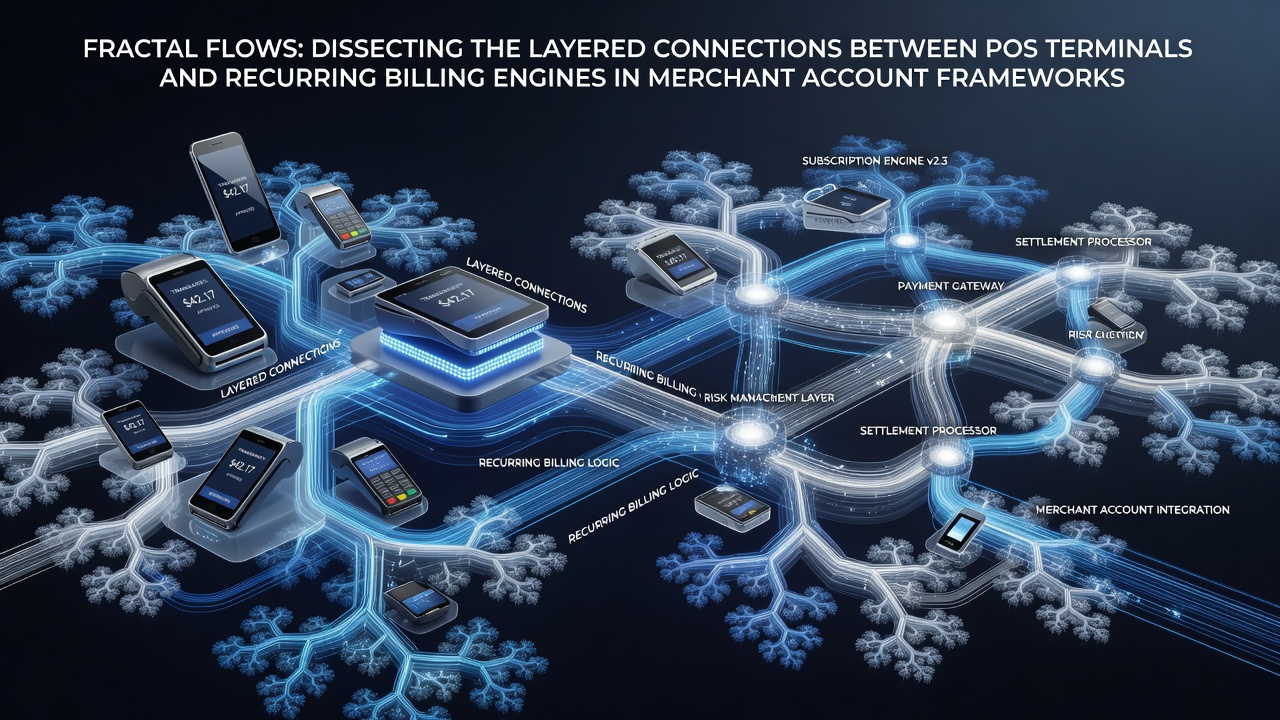
Payment ecosystems display repeating structural patterns where point-of-sale terminals feed transaction data into merchant account frameworks that also support recurring billing engines, and observers note these patterns repeat across transaction volumes, authorization sequences, and settlement cycles. Data from industry reports indicates that merchant accounts serve as the central repository where authorization requests from in-store devices converge with subscription renewal triggers generated by billing platforms, creating pathways that maintain consistency whether the charge originates from a physical swipe or an automated schedule.
Merchant Account Structures as the Common Foundation
Merchant accounts aggregate processing capabilities that accommodate both one-time POS authorizations and recurring charges, while settlement rules, risk parameters, and reporting requirements remain unified across these functions. Research from the Bank for International Settlements shows that frameworks built around a single merchant identifier allow processors to apply consistent underwriting criteria to both terminal-based activity and subscription streams, reducing the need for separate account setups and enabling shared fraud monitoring tools. Those who manage these accounts observe that the underlying ledger entries follow similar validation steps regardless of whether the entry arrives from a countertop device or a cloud-based billing engine, producing the self-similar layering that defines fractal-like flows.
POS Terminals and Their Integration Points
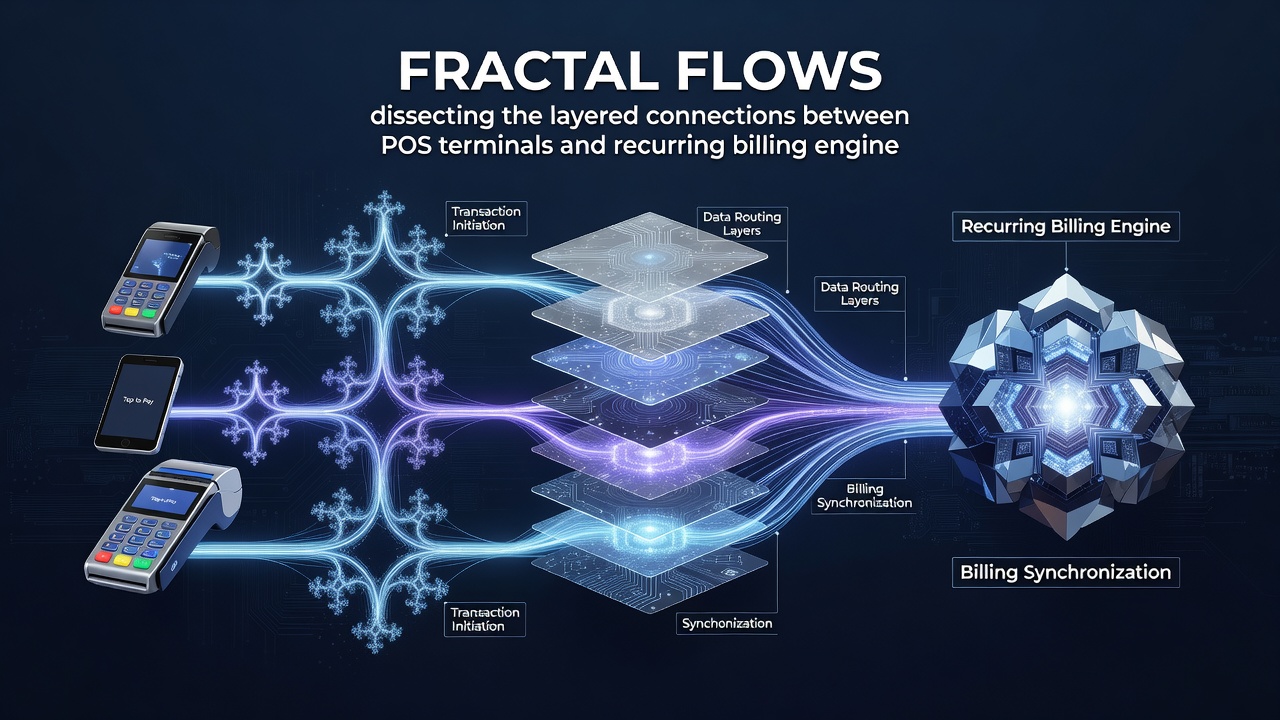
Modern POS terminals transmit authorization requests through encrypted channels that connect directly to the acquiring bank’s gateway, yet the same gateway frequently routes recurring billing requests through identical authentication layers. Studies from Payments Canada reveal that terminal firmware and recurring engines both rely on tokenized card data stored within the merchant account profile, allowing the system to apply identical velocity checks and address verification protocols to each transaction type. When a customer completes an in-store purchase, the terminal captures the card details once and stores them for potential future use in subscription cycles, a practice that creates overlapping data paths rather than isolated ones.
Recurring Billing Engines and Shared Data Layers
Billing engines pull stored credentials from the merchant account to initiate scheduled charges, and the authorization sequence mirrors the steps executed by a physical terminal, including AVS checks, CVV validation, and risk scoring performed by the same processor. According to figures released by the Reserve Bank of Australia, subscription platforms integrated with merchant accounts demonstrate authorization success rates that track closely with in-store terminal performance when identical risk rules apply across both channels. This alignment occurs because the billing engine queries the same merchant account database that the terminal uses, producing coordinated responses that maintain balance between immediate retail activity and ongoing subscription management.
Layered Authorization and Settlement Pathways
Authorization messages travel through multiple hops that include the terminal or billing engine, the acquirer, card networks, and the issuer, while settlement files consolidate all approved transactions into unified batches regardless of origin. Observers note that a single merchant account identifier appears on both POS receipts and subscription invoices, allowing downstream reconciliation systems to match entries without distinguishing between the two sources. Data indicates that processors apply batch settlement rules uniformly, and foreign exchange adjustments, if applicable, follow the same currency conversion tables for both terminal and recurring entries, preserving consistency across the layered structure.
Regulatory Developments Expected in August 2026
Updates scheduled for August 2026 from the European Central Bank will require enhanced tokenization standards across all merchant account activity, including both POS and recurring streams. These changes mandate that stored credentials used by billing engines receive the same encryption treatment applied to terminal-captured data, reinforcing the shared security layer already present in many frameworks. Processors preparing for the deadline have begun mapping their existing connections to ensure compliance without separating the two transaction categories into distinct accounts.
Practical Examples of Integrated Flows
One retail chain integrated its countertop terminals with a subscription platform through a common merchant account, resulting in unified reporting that combined daily in-store totals with monthly renewal volumes. Researchers documented that teh shared risk engine flagged anomalous patterns across both channels using a single set of thresholds, demonstrating how the layered architecture reduces duplication while maintaining oversight. Similar configurations appear in hospitality settings where guest folio charges processed at the property terminal feed into recurring membership renewals managed by the same account structure.
Conclusion
The connections between POS terminals and recurring billing engines within merchant account frameworks exhibit repeating structural elements that operate at multiple scales, from individual authorization messages to aggregated settlement reports. Industry data continues to show that unified account parameters, shared token repositories, and coordinated risk protocols sustain these flows, and upcoming regulatory adjustments in 2026 will further align the technical requirements applied to both transaction types. Those who examine these systems find that the layered architecture supports operational efficiency while preserving the traceability needed for compliance and reconciliation across retail environments.