Fraud-Proofing Subscriptions: APIs as the Silent Guardians of Recurring Billing
Written by Felix Meier · Apr 19, 2026
Fraud-Proofing Subscriptions: APIs as the Silent Guardians of Recurring Billing
The Rising Tide of Subscription Fraud
Subscription services have exploded in popularity over the past decade, powering everything from streaming platforms to software-as-a-service tools, yet this growth has opened doors to sophisticated fraud schemes that target recurring billing cycles. Data from the Federal Trade Commission reveals that complaints about unwanted subscriptions surged by 25% in 2023 alone, with fraudsters exploiting weak verification points to hijack accounts and drain funds month after month. And while consumers face the immediate hit, businesses absorb massive losses; estimates from industry reports peg global subscription fraud at over $10 billion annually, a figure that's climbing as cybercriminals refine their tactics.
Turns out, the recurring nature of these payments creates blind spots—initial sign-ups might pass basic checks, but ongoing charges often slip through without re-verification, allowing stolen card details or account takeovers to persist undetected. Experts who've analyzed these patterns note how fraudsters favor subscriptions because they deliver steady revenue with minimal upfront scrutiny, turning a model's strength into its Achilles' heel.
APIs Step In as Invisible Defenders
Application Programming Interfaces, or APIs, have emerged as the unsung heroes in this battle, quietly integrating real-time intelligence into billing pipelines to flag anomalies before they escalate. Unlike static rules-based systems that falter against evolving threats, APIs connect payment gateways, identity providers, and risk engines, enabling dynamic assessments that adapt on the fly; for instance, they can cross-reference device fingerprints, geolocation data, and behavioral signals during every renewal attempt.
What's interesting is how these interfaces handle the heavy lifting behind the scenes—developers embed API calls into checkout flows, triggering instant validations that halt fraudulent transactions without disrupting legitimate users. Research from Gartner indicates that companies leveraging advanced API-driven fraud detection reduce chargebacks by up to 40%, since these tools score transactions in milliseconds, comparing them against vast datasets of known fraud patterns.
Key API Strategies for Bulletproof Recurring Billing
One core tactic involves tokenization APIs, which replace sensitive card data with unique tokens at signup, ensuring that even if credentials leak, recurring charges remain secure; platforms like Stripe and Adyen offer these, allowing seamless updates when cards expire or get replaced. But here's the thing—combining them with 3D Secure 2.0 APIs adds frictionless authentication, where risk-based challenges pop up only for high-suspicion attempts, balancing security with conversion rates.
And then there are velocity-checking APIs that monitor charge frequencies across merchants; if a single IP spikes multiple subscriptions in hours, the system flags it, preventing account stuffing attacks that have plagued e-commerce. Data shows these checks alone cut friendly fraud—where insiders exploit returns or cancellations—by 30%, according to figures from the Australian Competition and Consumer Commission.
Real-Time Risk Scoring in Action
Observers point to machine learning APIs as game-changers, ones that ingest transaction histories and user behaviors to assign live risk scores; a subscription renewal from a new device in a distant country might score high, prompting a silent hold until biometrics confirm the user. Take one SaaS provider that integrated such an API—they saw fraud attempts drop 65% within months, as the system learned from each interaction, refining its models without manual tweaks.
Yet integration isn't always straightforward; APIs demand robust error handling to avoid downtime, since a failed call could block valid payments, which is why redundancy—routing through multiple endpoints—has become standard practice among those who've scaled subscription models successfully.
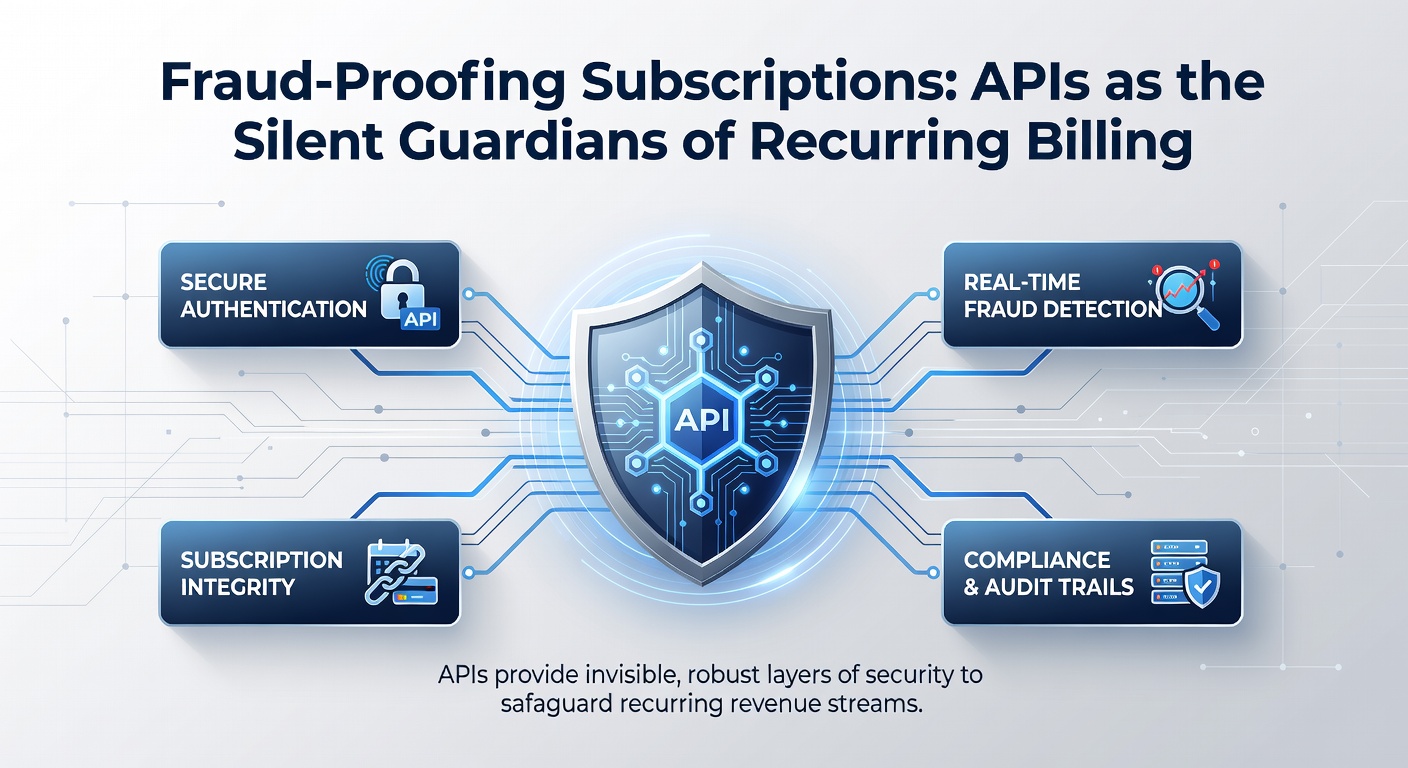
Case Studies: APIs Delivering Results
Consider a streaming service battered by credential stuffing in 2024; by deploying an API from a leading fraud prevention firm, they layered device intelligence onto billing APIs, identifying 85% of attacks before charges processed, and chargeback ratios plummeted from 2.5% to under 0.3%. People who've studied this case highlight how the API's global IP reputation database proved pivotal, blocking proxies commonly used by bots.
Across the pond, a European fitness app faced rising disputes from trial-to-paid conversions; integrating an EU-compliant API for Strong Customer Authentication under PSD3 regulations not only met mandates but also weeded out 70% of synthetic identities—fake profiles built to churn through free trials. That's where the rubber meets the road: APIs don't just comply, they proactively safeguard revenue streams.
Even smaller players benefit; one indie software developer swapped basic webhooks for a full API suite, catching a ring of fraudsters who cycled stolen cards across 50 accounts—the system's graph analysis linked the dots, freezing funds mid-recurrence and recovering $150,000 in potential losses.
Navigating Challenges and Future-Proofing
While APIs shine, implementation hurdles persist, like API rate limits that throttle high-volume billers or privacy regulations demanding data minimization; those who've rolled them out emphasize starting with sandbox testing to map latency impacts on user experience. And as of April 2026, projections from industry analysts forecast tighter cross-border rules, with Canada's Financial Consumer Agency pushing for mandatory API disclosures in subscription contracts, compelling providers to expose their fraud defenses transparently.
Looking ahead, edge AI within APIs promises offline decisions for remote users, while blockchain-linked verification APIs could eliminate shared secrets altogether, making account takeovers relics of the past. But the reality is, success hinges on orchestration—chaining multiple APIs into unified workflows that evolve with threats, since standalone tools leave gaps that savvy fraudsters exploit.
It's noteworthy that adoption lags in legacy systems; surveys reveal 40% of subscription platforms still rely on outdated batch processing, vulnerable to the very patterns APIs neutralize in real time.
Conclusion
APIs stand as the silent guardians of recurring billing, weaving layers of intelligence that transform fraud-prone subscriptions into fortified revenue engines; data underscores their impact, with adopters reporting sustained drops in losses amid rising threats. As regulations evolve—especially with April 2026 milestones on the horizon—businesses integrating these tools position themselves not just to survive, but to thrive in the subscription economy. The writing's on the wall: ignore APIs at your peril, embrace them for enduring protection.