Ledger Sync Points: How Batch Settlement Timelines Anchor Credit Card Authorizations for Subscription Continuity in Wireless Retail Networks
Written by Xander Patterson · Aug 2, 2026
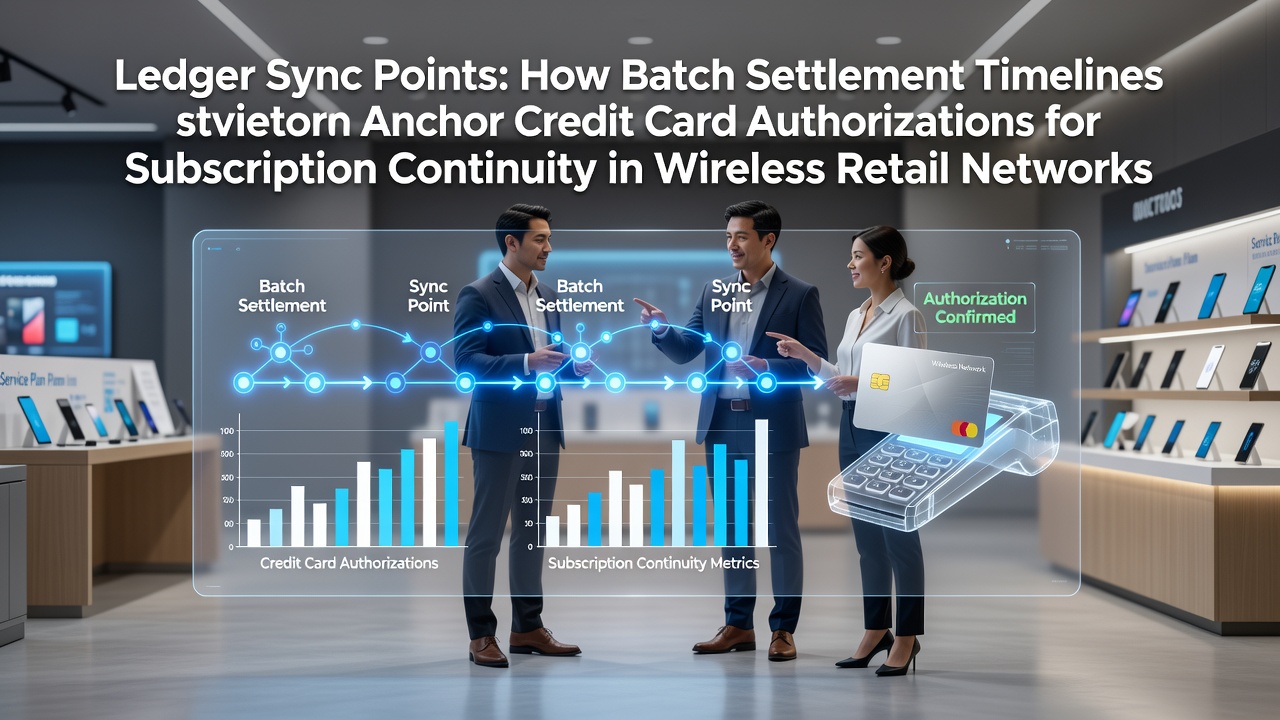
Ledger Sync Points: How Batch Settlement Timelines Anchor Credit Card Authorizations for Subscription Continuity in Wireless Retail Networks
Wireless retail networks rely on precise coordination between credit card authorizations and subscription billing cycles, and ledger sync points serve as the critical junctions where batch settlement timelines align these processes. Retail operators process high volumes of recurring charges through mobile point-of-sale systems, and settlement batches typically close at scheduled intervals that determine when funds move from issuing banks to merchant accounts. When sync points match these batch windows, pending authorizations convert into settled transactions without disrupting the continuity of monthly or quarterly subscriptions.
Mechanics of Ledger Sync Points in Authorization Flows
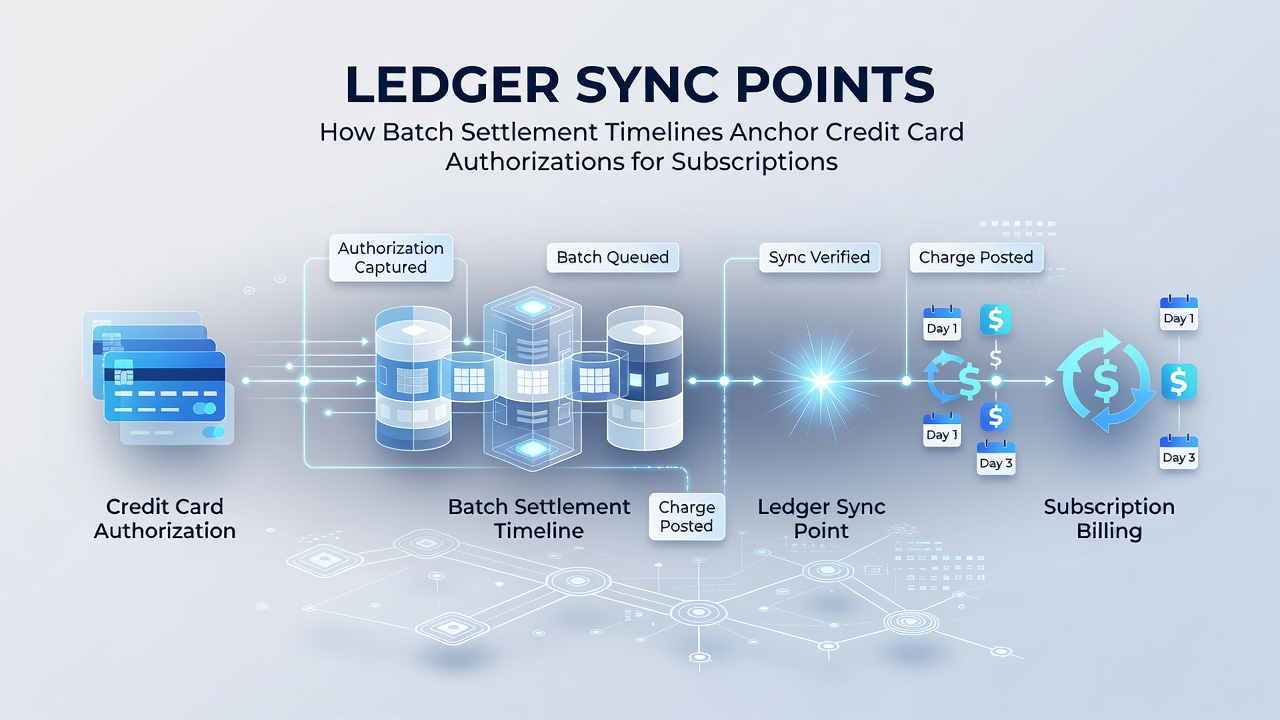
Each sync point records the status of an authorization hold, the associated batch identifier, and the projected settlement date, allowing systems to verify that funds remain reserved until the batch processes. Wireless retailers often operate across multiple terminals and cloud platforms, so these records prevent duplicate holds or premature releases that could interrupt automated renewals. Data from payment processors shows that synchronization occurs at the close of each settlement cycle, which commonly runs every 24 to 48 hours depending on the acquiring bank and card network rules.
Batch settlement timelines anchor authorizations because they establish fixed windows during which captured transactions must post to avoid expiration of the original approval. In wireless retail environments, where devices handle both in-store swipes and subscription activations, a missed sync point can force re-authorization requests that delay service continuity for customers. Observers note that merchants configure their gateways to monitor these points automatically, triggering alerts when an authorization approaches its batch deadline without confirmation of settlement.
Integration with Subscription Continuity Requirements
Subscription models in wireless retail depend on seamless handoffs between authorization events and recurring billing dates, and ledger sync points ensure that each cycle begins with a valid, settled reference transaction. When a batch settles on schedule, the system updates the ledger to reflect cleared funds, which in turn validates the next authorization for the upcoming period. Research indicates that networks using synchronized batch timelines experience fewer interruptions in recurring revenue streams, particularly during high-volume periods such as device upgrade seasons.
August 2026 brought protocol adjustments from several major card networks that shortened certain batch windows by six hours, prompting wireless operators to recalibrate their sync point monitoring. Those adjustments aligned settlement cutoffs more closely with global time zones, reducing latency for international roaming subscriptions that bill across multiple regions. Retail systems that had already mapped their ledger points to these revised timelines maintained uninterrupted service for customers without requiring additional manual interventions.
Operational Patterns Across Retail Networks
Merchants in wireless retail often segment their transaction streams by product type, separating one-time device sales from recurring plan charges, and ledger sync points allow each segment to follow its own settlement schedule while sharing the same authorization infrastructure. This segmentation keeps high-frequency subscription batches from interfering with larger equipment purchases that settle on different cycles. Case examples from regional carriers demonstrate that separate sync points per segment reduce the risk of authorization declines during peak renewal windows.
Processors apply risk rules at each sync point to confirm that the original authorization amount still matches the captured value before batch submission, and this verification step protects against partial shipments or plan changes that alter billing totals mid-cycle. When discrepancies appear, the system can hold the batch or route the transaction to a manual review queue, preserving continuity for the majority of accounts that remain within expected parameters. Figures from industry reports reveal that such automated checks handle over 95 percent of recurring wireless transactions without escalation.
Technical Considerations for System Design
Developers building wireless retail platforms embed timestamp fields and batch reference identifiers directly into the authorization record, enabling real-time queries that confirm whether a given transaction has reached its sync point. These fields support reconciliation processes that run after each settlement cycle, matching cleared amounts against expected subscription revenue. Network architects design redundancy into these queries so that temporary outages at one sync point do not cascade into missed renewals across the broader merchant account structure.
Encryption standards applied to ledger data at rest and in transit further secure the connection between authorization events and batch outcomes, preventing tampering that could alter settlement timelines. According to guidance from the Federal Reserve, consistent application of these standards across acquiring institutions supports reliable operation of recurring payment systems in retail environments. Additional resources from the European Central Bank outline similar requirements for cross-border settlement alignment that affect wireless carriers operating in multiple jurisdictions.
Conclusion
Ledger sync points function as the operational backbone that ties batch settlement timelines to ongoing credit card authorizations, delivering the stability required for subscription continuity in wireless retail networks. As settlement protocols evolve and batch windows shift, systems that maintain accurate mapping of these points continue to support uninterrupted service delivery. Retail operators who monitor sync events alongside authorization lifecycles position their platforms to handle both routine renewals and the occasional protocol update without customer-facing disruptions.