Mapping Credit Card Authorization Routes Through Merchant Account Frameworks for Consistent Recurring Payments in Mobile POS and Online Systems
Written by Xander Patterson · Aug 25, 2026
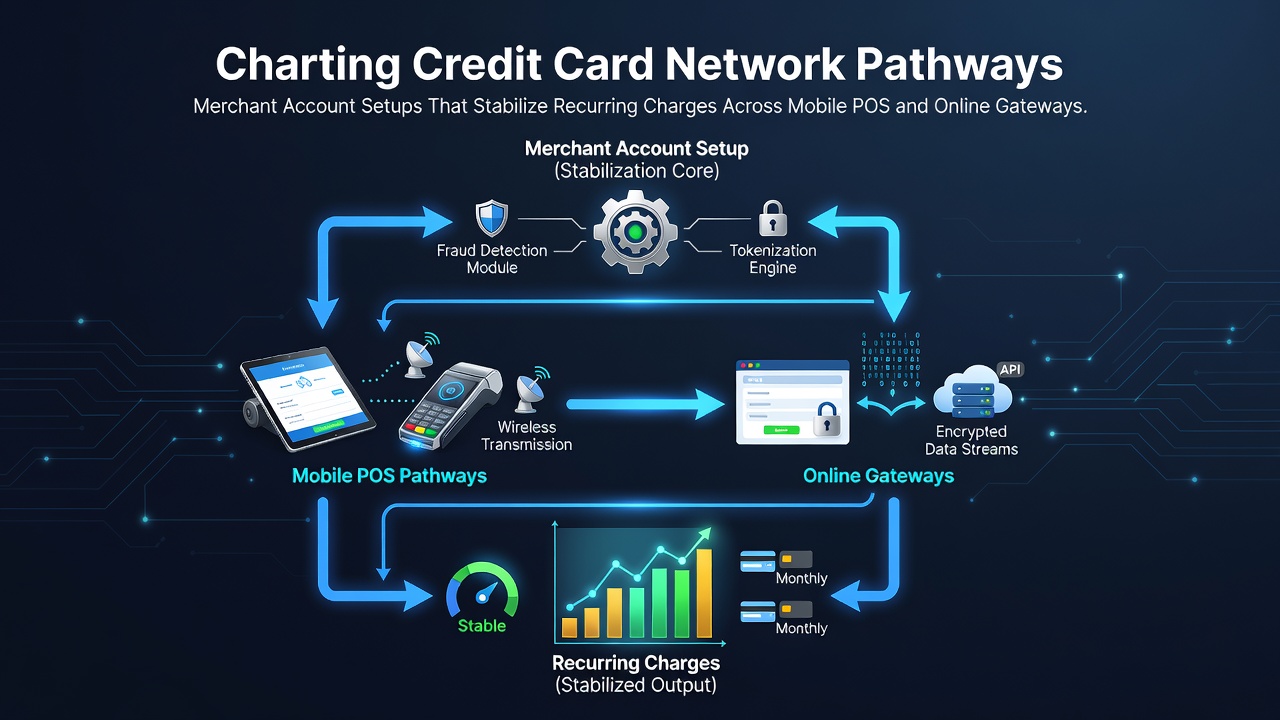
Mapping Credit Card Authorization Routes Through Merchant Account Frameworks for Consistent Recurring Payments in Mobile POS and Online Systems
Merchant account configurations play a central role in directing credit card authorizations along specific network routes that support recurring charges, and these setups connect mobile point-of-sale devices with online payment gateways through established banking channels. Data from payment processing networks shows that structured merchant accounts maintain transaction flows by assigning unique identifiers that follow predefined paths across acquirer banks and card issuers, which helps sustain monthly or subscription-based billing cycles without interruption.
Observers note that the process begins when a merchant opens an account with an acquiring bank, and this account receives routing information tied to the merchant category code plus terminal identifiers for both mobile and web-based transactions. Once activated, the account links to card networks such as Visa or Mastercard, allowing authorization requests to travel from a mobile device in a retail setting to the same backend processor used by an online checkout page. Researchers at payment industry groups have documented how these connections reduce settlement delays, because the account parameters already contain the necessary recurring billing flags that issuers recognize on subsequent cycles.
Core Components of Merchant Account Routing Structures
Each merchant account contains several fixed elements that determine how credit card data moves through the network, and these elements include the merchant identification number, the acquiring bank identification number, and the settlement account details. When a recurring charge originates from a mobile POS unit, the device transmits the stored card token along the route specified in the account profile, while an online gateway uses the identical profile to send an equivalent request through web APIs that map to the same network endpoints. Studies from financial infrastructure reports indicate that alignment of these elements across channels produces higher approval rates for repeat transactions, because issuers see consistent merchant data on every authorization attempt.
Payment processors assign specific BIN ranges and routing tables to merchant accounts, and these tables direct traffic based on card type, transaction amount, and billing frequency. In practice, a mobile terminal in a physical store sends an authorization request that travels first to the acquirer, then to the card network switch, and finally to the issuer for approval, whereas an online gateway follows a parallel sequence that reuses the same switch points once the merchant account parameters are configured correctly. Figures from the Federal Reserve payment systems reports reveal that accounts with unified routing tables process recurring charges across both environments with fewer declines during high-volume periods.
Integration Points Between Mobile Terminals and Digital Gateways
Integration occurs when the merchant account profile registers both the mobile terminal IDs and the online gateway credentials under a single settlement arrangement, and this registration allows the network to treat charges from either source as part of the same recurring series. The account setup includes fields for recurring payment indicators that travel with every authorization, so issuers can match new requests to prior approvals without requiring additional verification steps each cycle. As of August 2026, updated network specifications require these indicators to appear in standardized message formats for all recurring transactions, regardless of whether the request arrives from a handheld device or a web server.
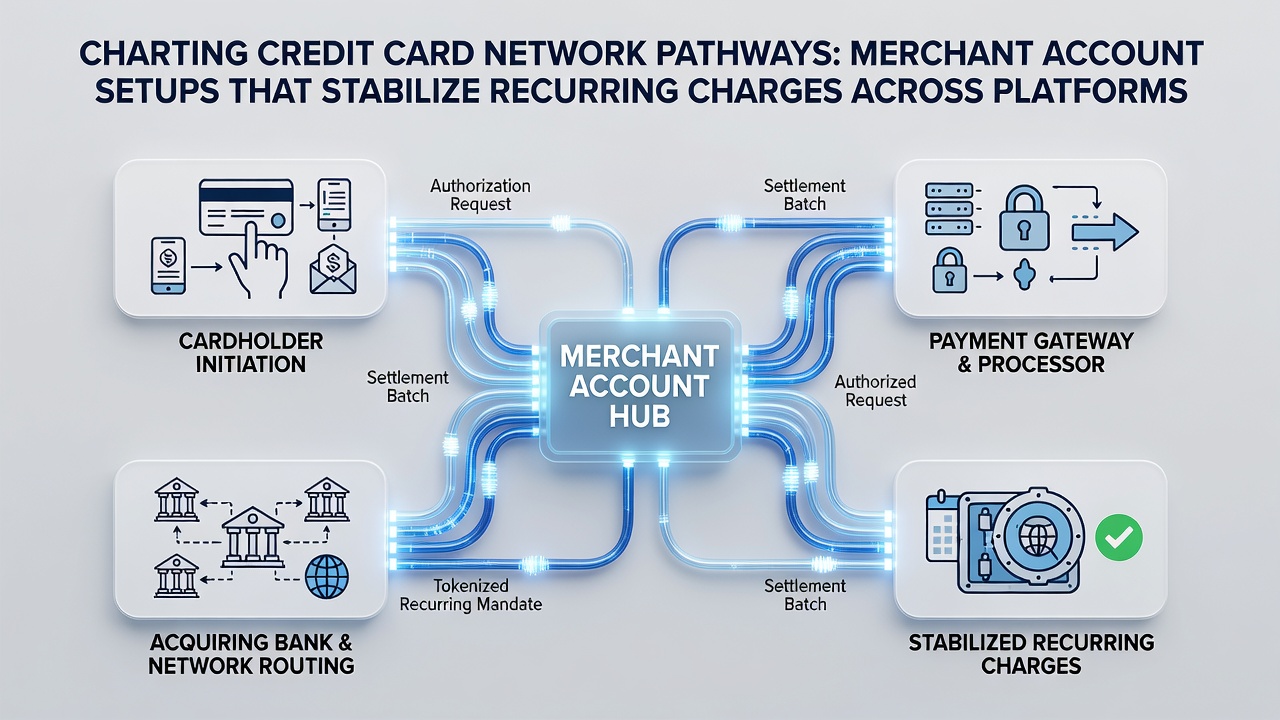
One documented case involves a retail chain that registered its mobile fleet and website under the same merchant account structure, after which recurring membership renewals processed through either channel followed identical authorization sequences. The chain's processor reported that settlement times remained consistent because the account's designated funding route handled both in-person and remote requests without separate reconciliation steps. Similar patterns appear in data compiled by the Bank for International Settlements, which tracks how unified merchant profiles support cross-channel recurring flows in multiple jurisdictions.
Settlement and Reconciliation Pathways
Settlement follows the authorization path in reverse, returning funds to the merchant's designated account after the issuer releases the hold, and reconciliation reports list charges from mobile and online sources in a single daily batch when the merchant account is configured for combined reporting. This arrangement eliminates the need for separate ledgers, because the network applies the same interchange rates and settlement windows to all recurring items that share the account identifier. Industry analyses show that accounts set up with these combined pathways experience fewer mismatches during end-of-month reviews, since every transaction carries matching metadata from the original merchant profile.
Conclusion
Merchant account setups that chart credit card network pathways create stable conditions for recurring charges by aligning mobile POS operations with online gateway activity under shared routing and settlement rules. The resulting structure allows authorization requests and fund movements to follow predictable sequences across both environments, supported by standardized indicators and unified reporting. Evidence from central banking sources and payment network statistics confirms that properly configured accounts sustain these flows through consistent data transmission and settlement procedures.