Mapping Merchant Account Designs to Recurring Charge Mechanisms in Handheld Retail Systems
Written by Xander Sullivan · Aug 16, 2026

Mapping Merchant Account Designs to Recurring Charge Mechanisms in Handheld Retail Systems
Portable retail devices handle transactions through layered connections that tie merchant account frameworks directly to ongoing billing processes, and these linkages determine how charges flow without interruption across wireless networks. Data from payment processors shows that account structures typically include primary merchant identifiers paired with sub-accounts that segment transaction types, which allows continuous billing cycles to reference stored credentials on handheld terminals.
Core Components of Account Structures in Mobile Retail
Merchant accounts on portable systems rely on unique identifiers assigned during onboarding, and these identifiers link to settlement banks through gateway providers while portable devices pull authorization requests in real time. Researchers at academic institutions have documented how deposit profiles within these accounts maintain reserve balances that cover chargebacks during recurring sequences, and this setup prevents settlement delays when subscriptions renew automatically. Observers note that portable retail devices often embed tokenization modules that reference the parent account structure for each cycle, which reduces exposure by replacing card details with encrypted references stored in the cloud.
Account hierarchies also incorporate risk parameters set at the processor level, and these parameters adjust dynamically based on transaction velocity from specific devices. Studies from North American financial networks indicate that sub-accounts can isolate different billing frequencies, such as monthly versus quarterly renewals, so operators maintain separate ledgers that feed into unified reporting without mixing one-time sales with recurring flows.
Integration Pathways for Continuous Billing Cycles
Continuous billing cycles operate by scheduling authorization calls that originate from the portable device and route through the account structure to the issuing bank, and this process repeats at defined intervals while the device remains offline or connected via cellular data. Evidence from industry reports reveals that portable terminals cache partial authorization data locally before syncing with the main account ledger, which maintains cycle continuity during network outages. Those who manage retail operations often find that API endpoints tied to the merchant account verify card validity on each cycle without requiring full re-entry of details on the handheld unit.
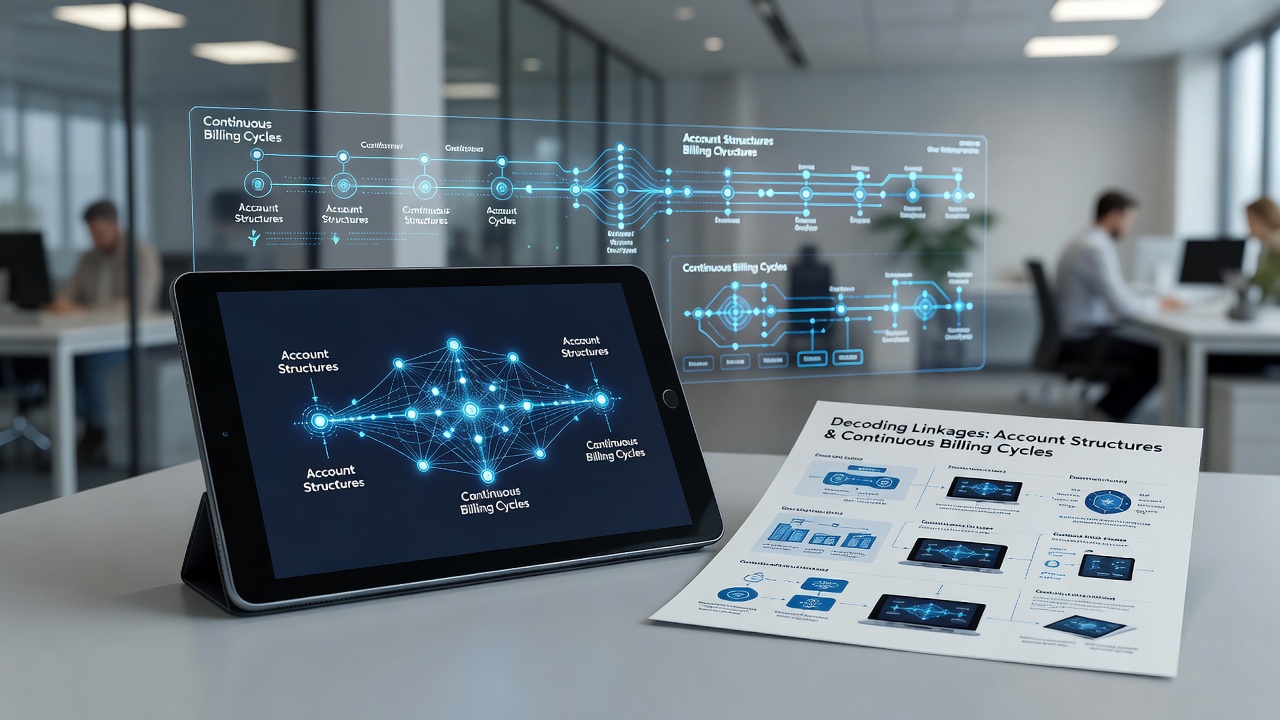
Routing occurs through standardized protocols that map device-generated requests to the appropriate sub-account, and this mapping ensures that foreign exchange adjustments apply consistently across cycles when international cards participate. According to data compiled by the Federal Reserve, settlement times for recurring charges average under two business days when account structures include automated reconciliation rules that flag mismatches immediately. Portable devices equipped with updated firmware handle these mappings locally before transmitting batches, which speeds up the linkage without increasing error rates.
Security and Compliance Elements in Linked Systems
Security protocols embedded in account structures enforce encryption standards that protect billing cycle data as it moves between portable devices and central processors, and compliance frameworks such as those outlined by the Payment Card Industry Security Standards Council require regular audits of these linkages. Canadian regulatory filings from 2025 highlight how account-level controls limit retry attempts during failed cycles, which reduces fraud exposure on mobile hardware. Experts have observed that portable retail devices incorporate device-specific certificates that bind to the merchant account, creating an additional verification layer during each renewal sequence.
Authorization sequences further strengthen the connection by generating unique reference codes for every cycle, and these codes allow reconciliation teams to trace activity back through the account hierarchy without accessing raw card information. Research papers from European universities demonstrate that such tracing mechanisms cut dispute resolution times by nearly half when account structures support automated notifications to device operators.
Operational Adjustments Observed in Mid-2026
By August 2026, updates to wireless standards enabled portable devices to maintain persistent connections to account structures during extended field operations, and this change supported more stable billing cycles for retailers operating in remote locations. Figures from global payment associations show increased adoption of hybrid models where account sub-structures allocate funds across multiple device fleets while preserving cycle integrity. Those managing large-scale deployments report that these adjustments allow seamless scaling without reconfiguring core linkages each time a new handheld unit joins the network.
Conclusion
Linkages between account structures and continuous billing cycles on portable retail devices rest on standardized identifiers, tokenization, and automated routing that keep charges flowing reliably. Data indicates these connections continue to evolve with firmware updates and regulatory shifts, supporting consistent performance across varied retail environments.