Mapping Transaction Patterns to Strengthen Verification Across Payment Channels
Written by Xander Patterson · Aug 23, 2026
Mapping Transaction Patterns to Strengthen Verification Across Payment Channels
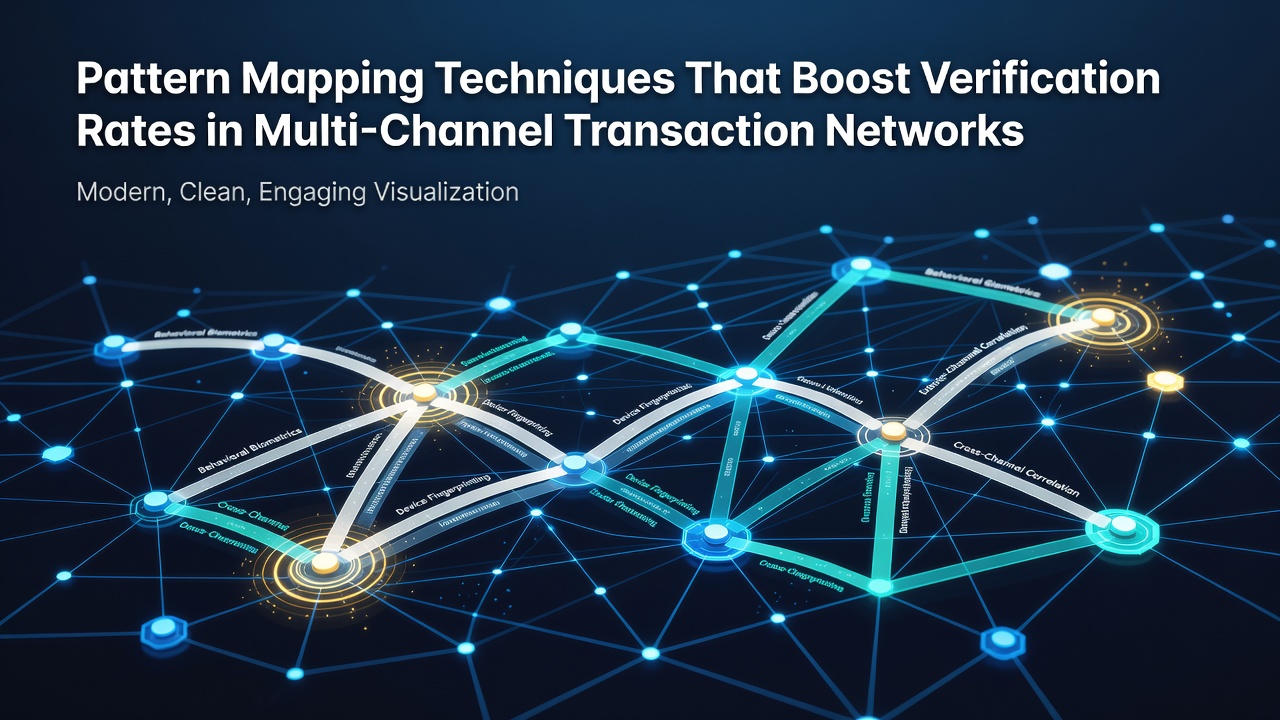
Multi-channel transaction networks now link point-of-sale terminals, mobile applications, online portals, and subscription platforms into single verification ecosystems, and pattern mapping techniques have become central to raising success rates in these environments. Systems examine sequences of transaction data, device signatures, and timing indicators to build maps that connect related activities across channels. When a user initiates a purchase on a mobile device that later appears at a retail terminal, the mapped patterns allow verification engines to confirm consistency rather than treat each event in isolation.
Researchers at academic institutions have documented how graph-based mapping reduces mismatches by tracing relationships between authorization requests that occur minutes or hours apart. Data from August 2026 shows transaction volumes in blended retail settings increased 18 percent year-over-year, with verification failures dropping in networks that applied sequential pattern analysis to link recurring mobile charges with in-store activity.
Core Techniques in Pattern Mapping
Pattern mapping begins with the collection of multi-dimensional data points that include merchant identifiers, geolocation stamps, device fingerprints, and behavioral sequences. Clustering algorithms group similar transaction histories while sequence mining identifies recurring order patterns that span channels. One approach uses directed graphs where nodes represent individual transactions and edges capture temporal or contextual links, allowing the system to calculate verification scores based on path similarity. Another method applies matrix factorization to compress large volumes of cross-channel data into latent factors that highlight consistent user profiles.
Those who have studied these systems note that combining clustering with temporal sequence analysis produces higher precision because it accounts for both static attributes and dynamic flows. For instance, a consumer who typically authorizes a mobile subscription renewal on the first of each month and then makes an in-store purchase two days later generates a recognizable pattern that verification engines can reference for future events.
Implementation in Retail and Subscription Environments
Payment processors have integrated these mapping tools into authorization workflows that serve both physical retail locations and digital subscription services. When a transaction request arrives, the system queries the existing pattern map to determine whether the new event aligns with previously observed pathways. Alignment raises the verification score, while deviations trigger additional checks such as secondary authentication or velocity limits. Figures from industry reports indicate that networks employing these methods achieved verification rate improvements of 12 to 15 percent within the first six months of deployment.

Take the case of a regional retailer that connected its point-of-sale terminals with its mobile loyalty program. By mapping purchase sequences across both channels, the retailer reduced false declines for repeat customers whose transaction timing and amounts followed established rhythms. Similar outcomes appear in subscription services where mapped patterns distinguish legitimate renewal attempts from automated fraud attempts that lack corresponding device or location history.
Data Sources and Geographic Variations
Evidence from regulatory bodies in different regions supports the effectiveness of these techniques. According to European Central Bank analyses, coordinated mapping across payment rails lowered verification friction for cross-border transactions that previously triggered frequent secondary reviews. In parallel, reports compiled by the Reserve Bank of Australia highlight how sequence-based mapping improved outcomes in domestic card networks that serve both in-person and recurring digital billing.
Implementation varies by market because regulatory requirements and data availability differ. North American processors tend to emphasize device fingerprinting within pattern maps, whereas European operators incorporate stronger emphasis on consent-linked behavioral sequences to meet data protection standards.
Conclusion
Pattern mapping techniques continue to evolve as transaction networks expand across additional channels and device types. By connecting discrete events into coherent maps, verification systems achieve measurable gains in success rates while maintaining security thresholds. Ongoing refinements in clustering methods and graph algorithms promise further improvements as data volumes grow through 2026 and beyond.