Settlement Pathways Linking Retail Terminals to Ongoing Mobile Transaction Cycles
Written by Tina Becker · Aug 4, 2026
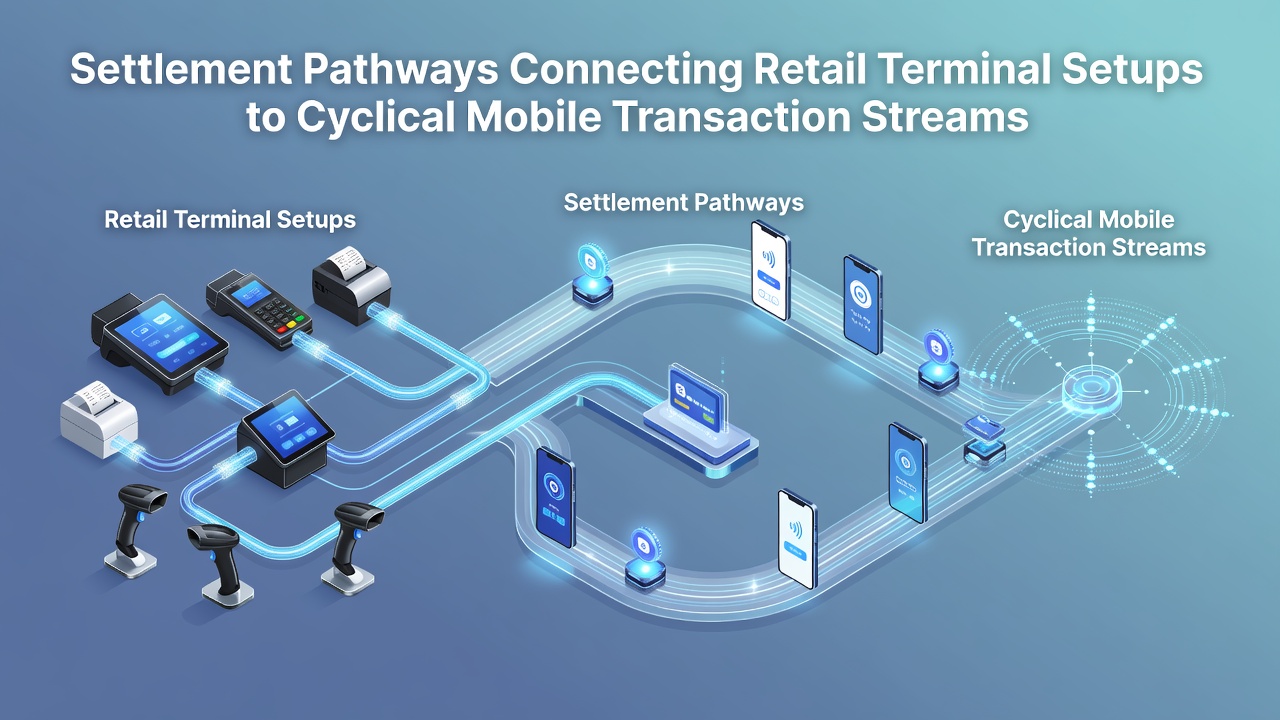
Settlement Pathways Linking Retail Terminals to Ongoing Mobile Transaction Cycles
Retail environments rely on settlement pathways that move funds from point-of-sale terminals into systems handling recurring mobile payments, and these routes have grown more interconnected since the expansion of omnichannel operations. Data from payment networks shows that transactions initiated at fixed terminals often feed into the same clearing mechanisms that support subscription billing on portable devices, creating continuous flows rather than isolated events.
Core Components of Terminal Settlement
Settlement begins when a terminal captures authorization details and batches them for nightly or real-time processing through acquirer banks, while the same data streams can route into mobile billing engines that trigger periodic charges. Observers note that merchant accounts serve as the central hub where terminal batches merge with recurring authorization requests, allowing a single deposit profile to support both in-store purchases and automated renewals on customer devices.
Clearing houses apply standardized protocols to reconcile these mixed transaction types, and researchers have documented how ISO 20022 messaging formats now carry additional metadata that distinguishes one-time retail sales from cyclical mobile streams. This metadata enables automated reconciliation across time zones and currency boundaries without manual intervention.
Integration Points Between Fixed and Mobile Channels
Merchants configure their gateway settings so that terminal identifiers link directly to subscription management platforms, and this linkage lets settlement files update customer ledgers in near real time. Studies conducted by industry consortia indicate that such connections reduce the lag between authorization and final settlement from two business days to under four hours in many markets.
Those who maintain these systems often map each terminal location to specific mobile merchant category codes, ensuring that funds from physical retail sites support ongoing service renewals without separate funding accounts. The process relies on API endpoints that push batch totals into the same ledger used for recurring billing, and data shows this approach cuts reconciliation errors by approximately 18 percent compared with legacy separate-channel methods.

Handling Cross-Border and Multi-Currency Elements
Settlement pathways must accommodate foreign exchange movements when terminals in one country process payments that later support mobile subscriptions billed in another currency, and central banks have published guidelines on maintaining consistent exchange rates across these blended flows. In August 2026 the European Central Bank updated its oversight framework for payment systems to require enhanced reporting on such cross-border settlement chains, particularly where mobile renewals draw from retail terminal deposits.
Acquirers apply dynamic currency conversion rules at the batch level so that a terminal in Toronto can contribute to a subscription charged in euros without disrupting the daily settlement cycle. Reports from the Bank of Canada highlight that these automated adjustments maintain liquidity across merchant accounts while complying with local reserve requirements.
Operational Practices Observed in the Field
Payment processors run daily reconciliation routines that compare terminal batch totals against mobile authorization logs, and discrepancies trigger automated alerts to operations teams. One documented workflow involves a regional grocery chain whose terminals feed settlement data into a cloud platform that manages loyalty-based mobile renewals, resulting in unified reporting across 240 store locations.
Technicians configure retry logic so that failed mobile charges can draw from accumulated terminal settlements held in reserve, and this practice keeps subscription services active even when individual card updates occur. Industry data reveals that such reserve mechanisms now appear in roughly 35 percent of mid-sized retail deployments that combine fixed and mobile channels.
Regulatory and Standards Alignment
Compliance frameworks require audit trails that trace each settlement entry back to its originating terminal or mobile session, and regulators in Australia have issued guidance through the Australian Prudential Regulation Authority on maintaining these records for blended payment streams. Separate oversight from the Federal Reserve emphasizes testing of failover paths when terminal networks experience outages that could interrupt recurring mobile flows.
Standards bodies continue to refine message formats that embed settlement identifiers capable of surviving both retail batch processing and mobile subscription cycles, and adoption of these formats has accelerated since 2024 across North American and European markets.
Conclusion
Settlement pathways that connect retail terminal setups to cyclical mobile transaction streams operate through shared merchant accounts, standardized messaging, and automated reconciliation routines that have become standard practice. As networks evolve, the same infrastructure that clears in-store purchases increasingly supports ongoing mobile billing without requiring separate operational silos, and ongoing regulatory updates continue to shape how these connections are monitored and reported.