Settlement Timelines Anchoring Recurring Mobile Charges in Merchant Networks
Written by Tina Becker · Aug 23, 2026
Settlement Timelines Anchoring Recurring Mobile Charges in Merchant Networks
Settlement timelines function as the structural backbone that keeps recurring mobile charges flowing reliably through merchant networks, and these cycles determine when authorized funds move from consumer accounts into merchant settlements. Mobile billing systems depend on precise coordination between authorization events and fund transfers, since delays in settlement can interrupt subscription renewals that rely on continuous cash flow across portable devices and cloud platforms. According to data from the Federal Reserve, electronic payment volumes have grown steadily, with settlement processes handling billions of transactions daily in coordinated batches that span retail channels.
Core Mechanics Behind Settlement Processes
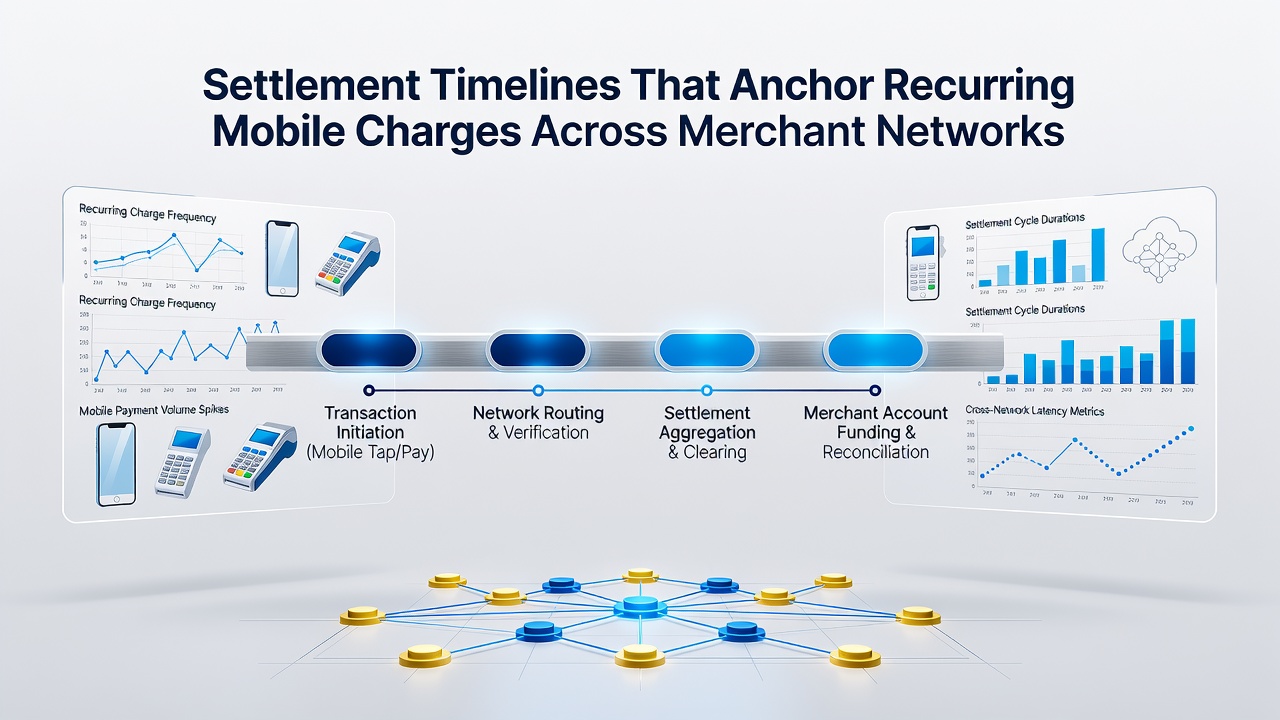
Merchants initiate recurring charges through mobile point-of-sale terminals or app-based gateways, and these authorizations travel through card networks before reaching settlement stages that clear funds into designated accounts. Settlement timelines typically range from one to three business days depending on the processor and region, yet recurring mobile systems require tighter alignment to prevent gaps in billing cycles that could affect service continuity. Researchers tracking payment infrastructure note that batch processing occurs at scheduled intervals, often overnight, which allows networks to reconcile authorizations with actual fund movements while maintaining accuracy across multiple merchant accounts.
Portable retail devices connect directly to cloud authorization systems, and this linkage ensures that settlement windows remain synchronized with subscription renewal dates. Data indicates that when settlement falls outside expected windows, merchants experience temporary shortfalls that disrupt automated renewals tied to mobile billing agreements. Observers have documented cases where extended settlement periods in cross-border transactions create additional friction, particularly when currency conversions add extra verification layers before funds finalize.
Integration with Mobile Recurring Billing Cycles
Recurring mobile charges operate on fixed intervals that merchants set through their account structures, and settlement timelines must match these intervals to anchor the entire flow of funds. Systems coordinate authorization sequences so that charges approved on portable devices trigger settlement entries within the same operational window, which supports consistent renewal patterns across retail networks. Figures from industry reports show that merchants using integrated mobile platforms achieve higher settlement predictability when they align their billing calendars with processor cut-off times.
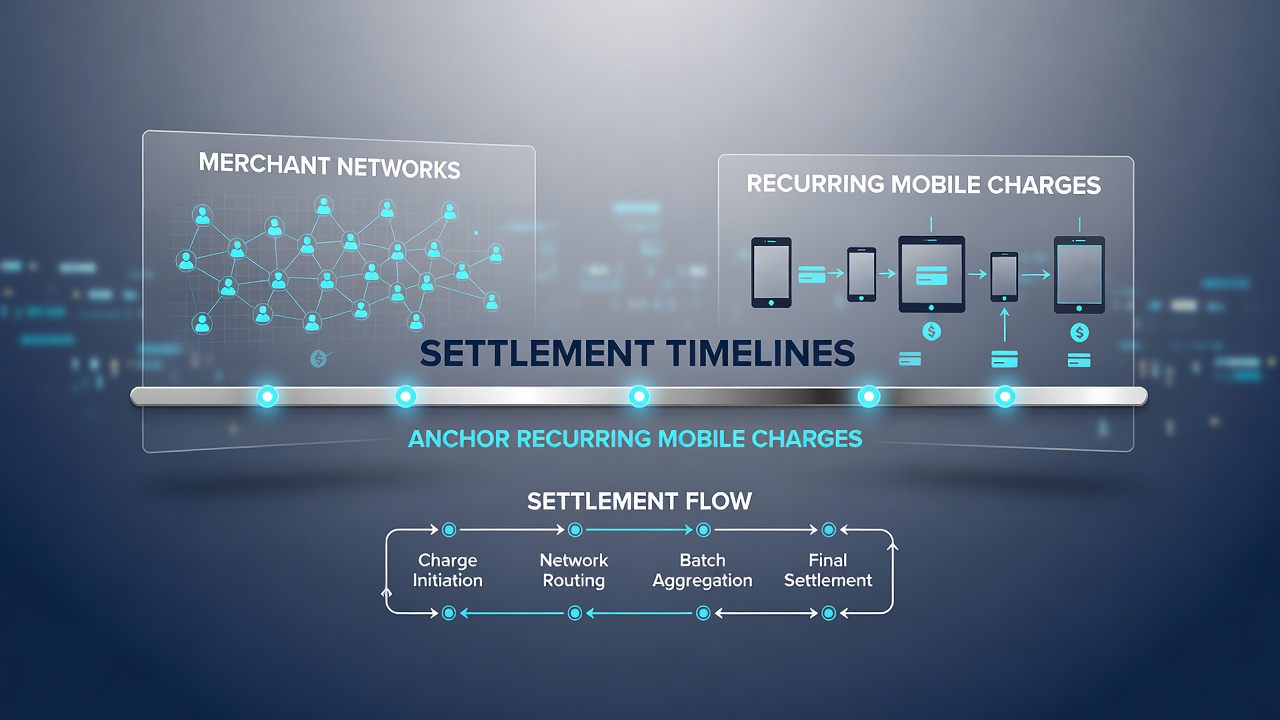
One study revealed that coordination between mobile gateways and settlement engines reduces failed renewals by matching authorization holds to actual transfer dates. In August 2026, several major networks introduced enhanced reconciliation tools that flag timing mismatches earlier in the cycle, allowing merchants to adjust recurring schedules before disruptions occur. These tools operate by scanning settlement queues against upcoming billing events, and they highlight potential delays that could affect charge sequences across blended retail operations.
Network-Wide Effects and Coordination Challenges
Merchant networks span multiple processors and card schemes, so settlement timelines influence how recurring mobile charges propagate through the broader ecosystem. When one segment experiences extended clearing periods, downstream renewals can shift, which creates ripple effects for service providers who depend on steady revenue streams. Evidence suggests that standardized settlement windows help stabilize these flows, particularly in omnichannel setups where in-store and online mobile billing intersect.
Payment processors manage risk by holding funds during settlement windows, and this practice protects against chargebacks while ensuring recurring authorizations remain valid. Those who manage merchant accounts observe that transparent timelines allow better forecasting of incoming funds tied to mobile subscriptions. Regulatory updates in various regions continue to emphasize faster settlement options, yet core batch systems still dictate the pace for most recurring mobile transactions.
Future Adjustments in Settlement Frameworks
Technological upgrades continue to refine how settlement timelines interact with recurring mobile charges, and new protocols aim to compress clearing periods without compromising verification steps. Merchants benefit when networks provide real-time status updates that link each authorization directly to its settlement outcome. Reports from the European Central Bank highlight ongoing efforts to harmonize settlement practices across borders, which supports more reliable billing cycles for mobile retail operators who serve international customers.
Conclusion
Settlement timelines remain central to the stability of recurring mobile charges within merchant networks because they determine the speed and reliability of fund movements from authorizations to final deposits. Coordinated systems that align these timelines with billing cycles help maintain uninterrupted service delivery across mobile channels, and ongoing refinements in processing tools continue to support this alignment. Data from established financial authorities shows that predictable settlement processes underpin the operational continuity merchants require for subscription-based models.