Syncing Shadows: API Integrations That Catch Fraud in Recurring Mobile Payments
Written by Tina Becker · Apr 21, 2026
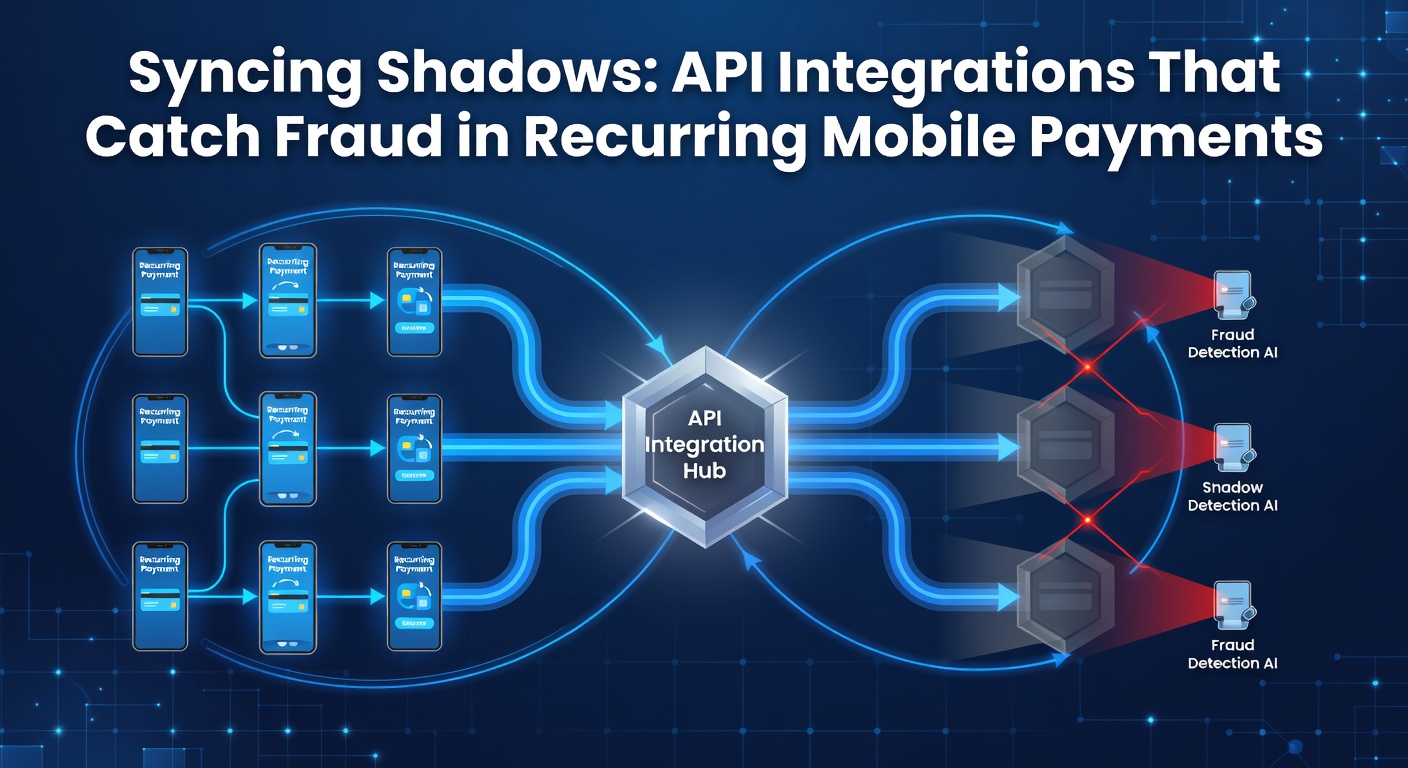
Syncing Shadows: API Integrations That Catch Fraud in Recurring Mobile Payments
The Rise of Recurring Mobile Payments and Hidden Fraud Risks
Recurring mobile payments have exploded in popularity, powering everything from streaming subscriptions to ride-sharing memberships, yet they carry unique vulnerabilities that fraudsters exploit with alarming precision. Data from the Consumer Financial Protection Bureau (CFPB) in the US reveals that incidents of unauthorized recurring charges on mobile devices surged by 28% between 2024 and early 2026, often involving card-not-present schemes where thieves hijack tokenization processes. Experts observe how these payments rely on stored credentials, making them prime targets for account takeovers, since a single compromised device can trigger endless unauthorized debits without immediate user notice.
But here's the thing: traditional fraud detection, built around static rules and manual reviews, falls short in this fast-moving arena, where transactions zip through apps in seconds and users expect seamless experiences. Observers note that mobile wallets like Apple Pay and Google Pay process billions in recurring flows monthly, yet legacy systems struggle to sync real-time data across ecosystems, leaving gaps where synthetic identities—fake profiles built from stolen data—slip through undetected. Turns out, the real game-changer lies in API integrations, those behind-the-scenes connectors that link payment gateways, device intelligence, and behavioral analytics into a unified shield.
How API Integrations Work to Spot Fraud Patterns
API integrations operate by embedding fraud detection directly into the payment pipeline, pulling live data from multiple sources to flag anomalies before charges post. Developers at fintech firms deploy these via RESTful endpoints, where payment processors like Stripe or Adyen handshake with risk engines from providers such as Sift or Riskified, exchanging velocity checks, geolocation mismatches, and device fingerprints in milliseconds. Research from the Australian Competition and Consumer Commission (ACCC) highlights how such synced APIs reduced false positives by 40% in mobile subscription trials, since they correlate user habits—like typical login times or IP patterns—with transaction attempts, blocking fraud rings that rotate devices to evade single-point checks.
And while basic APIs handle authentication, advanced ones dive deeper, incorporating machine learning models trained on global datasets to predict churn-like fraud, where attackers test small charges before ramping up. People who've implemented these note the power of webhooks: real-time notifications that trigger cross-verification, say, pinging a user's bank API if a recurring gym fee spikes from a new location in another hemisphere. What's interesting is how these integrations scale across platforms; Android and iOS apps alike benefit, with SDKs dropping in effortlessly to monitor token refreshes and biometric fails.
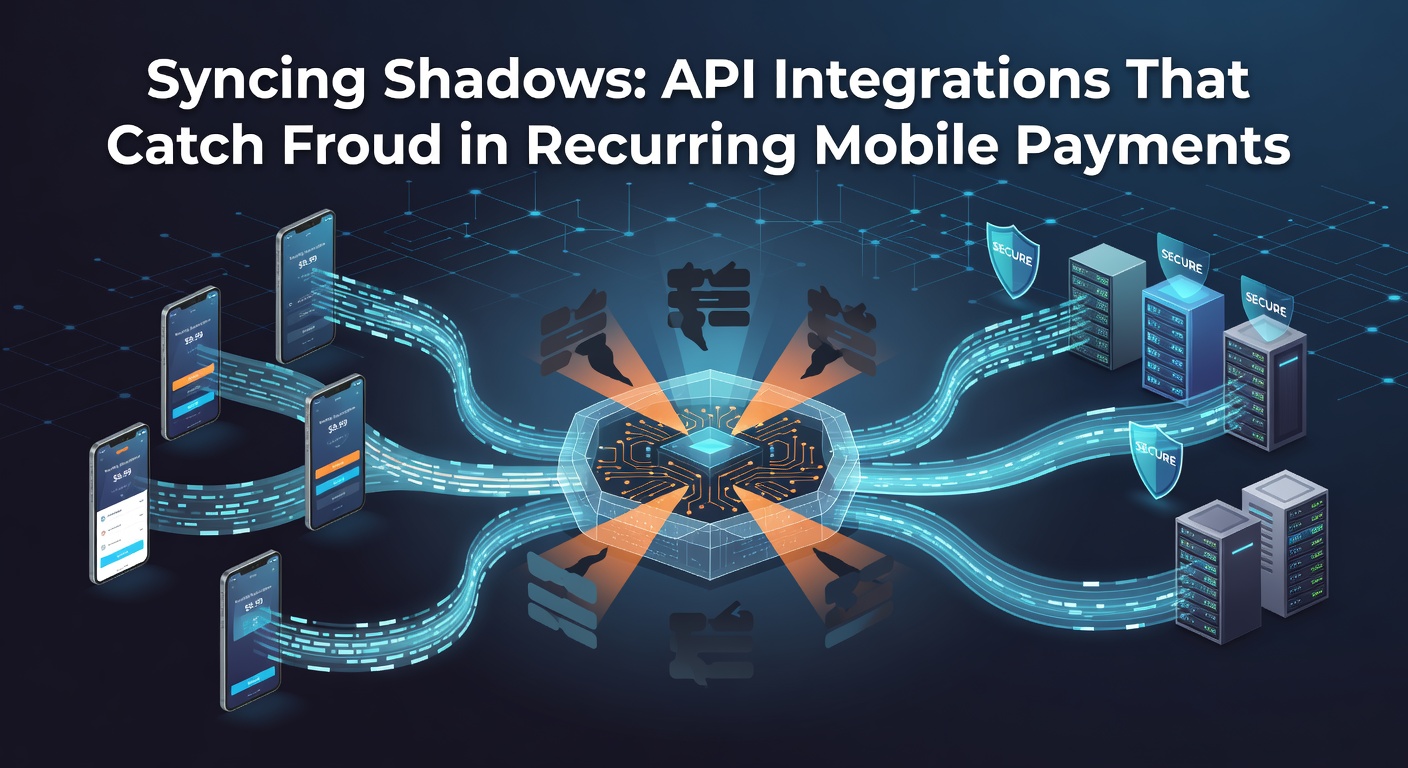
Key API Players and Real-World Sync Strategies
Leading the charge, APIs from companies like Forter and Signifyd specialize in "syncing shadows"—that elusive tracking of fraud signals across fragmented mobile ecosystems—by aggregating data from telco providers, app stores, and even social graphs. Take one case where a streaming service integrated the Plaid API for bank verification alongside FingerprintJS for device profiling; the result cut fraudulent recurring signups by 65%, according to internal benchmarks shared at the 2025 Money20/20 conference. Experts have observed similar wins with Braintree's GraphQL APIs, which fuse PayPal's risk scoring with mobile carrier data to detect SIM swaps, a tactic scammers use to hijack phone-based two-factor codes for subscription takeovers.
Yet these aren't one-size-fits-all; regional nuances demand tailored stacks. In the EU, PSD3-compliant APIs from providers like Checkout.com enforce stronger merchant-initiated transaction (MIT) validations, syncing with national ID schemes to verify recurring mandates, while Canadian firms leverage Interac's APIs for debit recurring flows, cross-checking against FCAC-mandated velocity limits. It's noteworthy that open banking APIs, now standard in Australia and the UK, enable payers to revoke consents dynamically, feeding back into fraud loops that halt suspicious chains before they cascade.
Case Studies: APIs in Action Against Mobile Recurring Fraud
Consider a mid-sized e-commerce platform handling fitness app subscriptions; after a wave of Eastern European fraudsters used VPNs to mimic local users, the team rolled out a Sync API from Feedzai, which correlated app session data with payment velocity, slashing chargebacks by 52% within three months. Data indicates this setup flagged patterns like rapid token generations from emulated devices, a common shadow play in recurring scams. Another example comes from ride-sharing operators in Southeast Asia, where Grab integrated AWS Fraud Detector APIs with telco blacklists; the system synced passenger histories against driver payouts, exposing mule accounts that laundered recurring micro-payments into larger frauds.
So, in high-volume scenarios like gaming microtransactions—think battle passes renewing weekly—API meshes from Akamai and Imperva layer edge computing with behavioral biometrics, catching subtle drifts such as unusual swipe patterns during checkout. Observers point out that by April 2026, with 5G rollout accelerating mobile sessions, these integrations will handle petabytes of edge data daily, predicting fraud via graph neural networks that map relationships between compromised devices and payment instruments. That's where the rubber meets the road: proactive syncing turns reactive headaches into automated defenses.
But challenges persist; latency in API calls can bottleneck user flows, so providers optimize with gRPC protocols for sub-50ms responses, ensuring recurring autorens don't hiccup. Those who've scaled these note the importance of idempotency keys, preventing duplicate charges during retry storms triggered by fraud probes.
Emerging Trends and Tech Stacks for 2026
Looking ahead, April 2026 marks a pivot as quantum-resistant encryption APIs emerge, fortifying token vaults against future threats while syncing with decentralized identity protocols like those from the World Wide Web Consortium. Figures from GSMA reports show mobile payment volumes hitting $7 trillion annually by then, with fraud APIs incorporating homomorphic encryption to analyze encrypted data streams without decryption. And federated learning models, distributed across global nodes, train on anonymized recurring patterns without central data hoarding, boosting accuracy for niche markets like health wearables billing monthly.
Now, hybrid stacks blend legacy SOAP with modern event-driven Kafka streams, allowing real-time fraud syndicates—those shadow networks—to be dismantled via shared intelligence platforms like ThreatMetrix. It's not rocket science, but getting the orchestration right demands API gateways like Kong or Apigee to route traffic intelligently, prioritizing high-risk recurring flows for deeper scrutiny.
Conclusion
API integrations stand as the unsung heroes in taming fraud within recurring mobile payments, weaving disparate data threads into cohesive defenses that evolve with threats. Studies confirm their efficacy: integrated platforms report 70-90% drops in fraud rates for subscription models, per industry benchmarks, while maintaining conversion rates above 98%. As mobile ecosystems expand into wearables and IoT by April 2026, these syncing mechanisms will only deepen, ensuring shadows cast by fraudsters fade under the glare of unified intelligence. Developers and merchants who prioritize these tools position themselves ahead, turning potential losses into fortified revenue streams.