Verification Pathways Enabling Sustained Account Transactions on Wireless POS Devices
Written by Drew Schmid · Jul 10, 2026
Verification Pathways Enabling Sustained Account Transactions on Wireless POS Devices
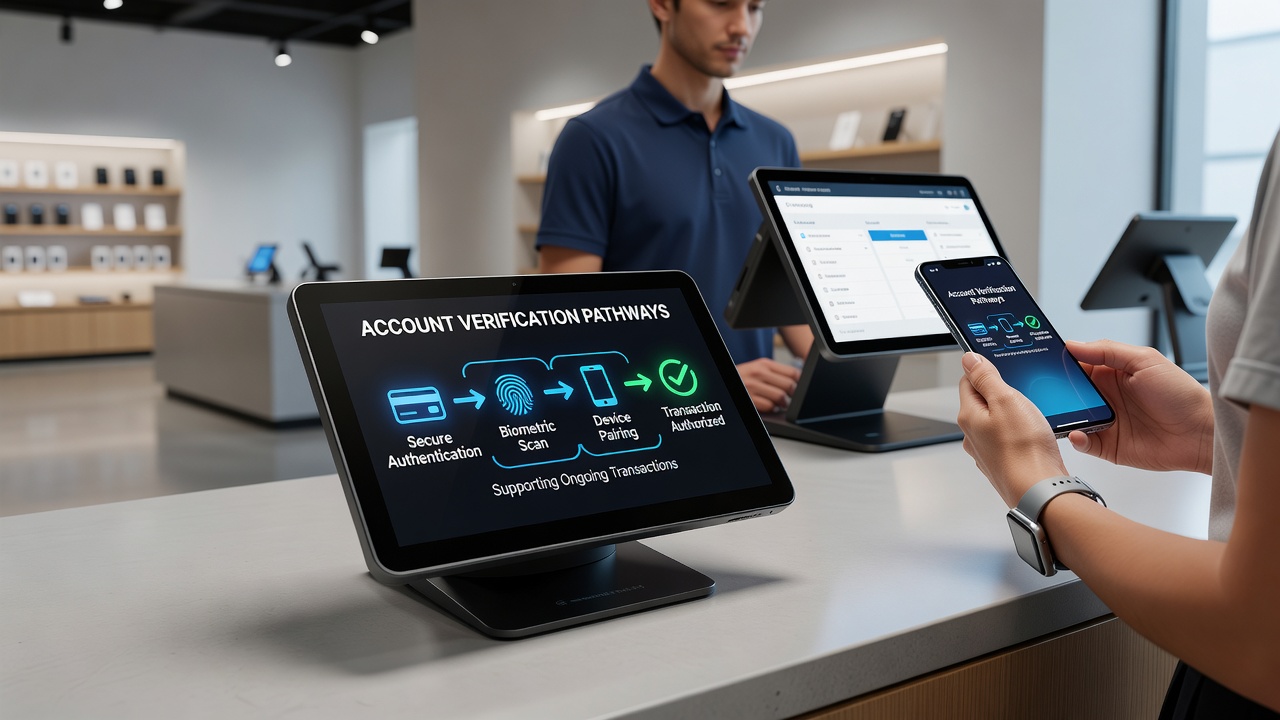
Wireless point-of-sale systems rely on structured verification sequences that confirm account details before processing ongoing payments, and these sequences integrate multiple authentication layers to maintain transaction continuity across mobile retail environments. Retail operators deploy device-based checks alongside network protocols that validate cardholder data in real time, ensuring each subsequent charge aligns with prior authorizations without requiring repeated full credential entry.
Core Components of Wireless Verification Sequences
Account verification in wireless POS setups begins with initial device provisioning where merchants register terminal identifiers with payment processors, and this step establishes baseline parameters for recurring authorization requests. Systems then apply token generation methods that replace sensitive card data with unique identifiers, allowing ongoing transactions to proceed through encrypted channels that comply with standards maintained by the PCI Security Standards Council. Data from industry reports shows these tokens reduce exposure during repeated wireless transmissions while preserving linkage to original account profiles.
Subsequent verification steps incorporate dynamic checks such as device fingerprinting and location confirmation, which processors use to flag anomalies before approving charges in subscription-style billing flows. Observers note that these layered approaches connect terminal hardware directly to cloud-hosted merchant accounts, creating pathways that support uninterrupted renewals on portable devices deployed in field operations.
Integration with Broader Payment Networks
Wireless POS verification pathways interface with credit card networks through standardized message formats that carry both initial authorization and follow-up transaction details, and these formats accommodate regional variations in data requirements across North American and European infrastructures. Processors route verification requests via secure APIs that link in-store terminal activity to backend billing cycles, enabling merchants to handle continuous charges without manual intervention at each interval.
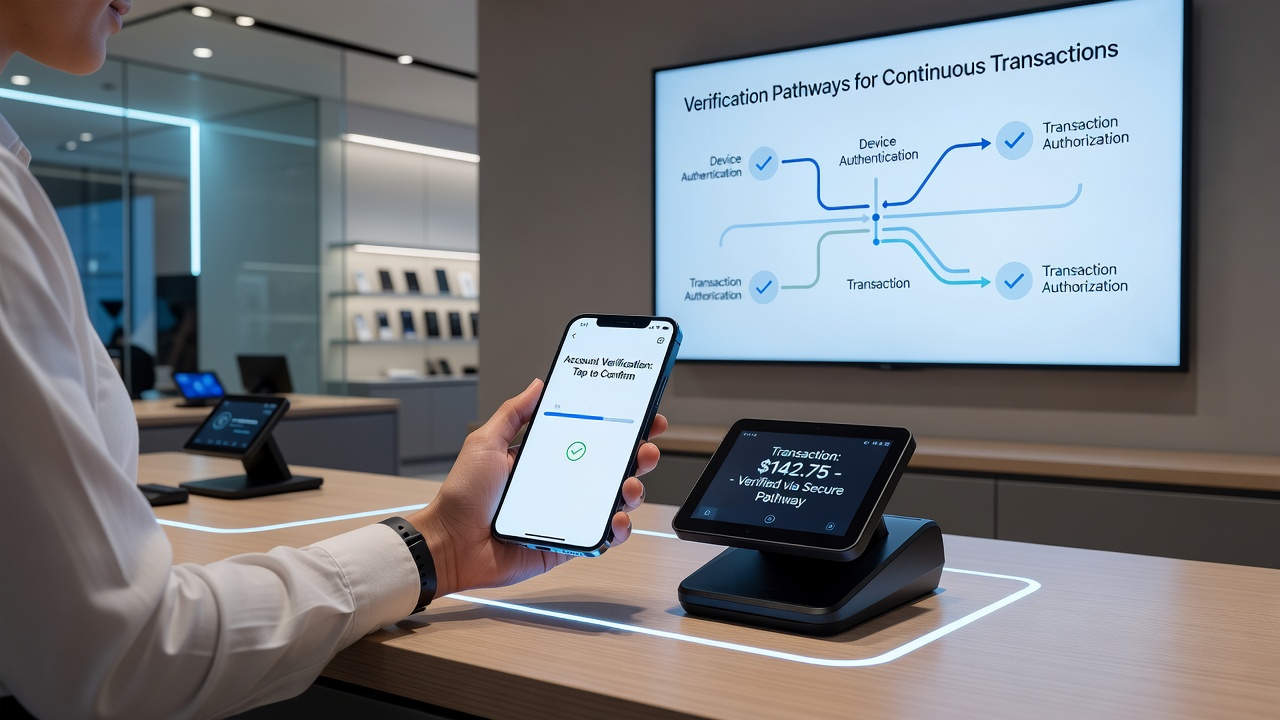
According to analyses from the European Central Bank on payment security frameworks, coordinated verification reduces authorization failures in mobile environments by aligning terminal data with account status updates received from issuing banks. Researchers at institutions studying retail technology have documented how such alignments support blended operations where physical device swipes trigger digital renewals scheduled weeks or months ahead.
Handling Recurring Elements in Mobile Retail
Merchants configure verification profiles that store recurring parameters like billing frequency and amount thresholds, and these profiles activate automatically when wireless terminals initiate contact with processing gateways during scheduled cycles. The architecture routes foreign exchange components through established merchant account structures when transactions span multiple currencies, maintaining consistency in charge flows without disrupting the verification chain.
Case studies from Canadian payment networks illustrate how deposit profile setups underpin these continuous operations, linking initial account validation to sustained authorization sequences that prevent interruptions in subscription management across distributed retail locations. Figures from the Australian Payments Network reveal steady adoption of these wireless verification methods in sectors handling high volumes of portable device transactions through July 2026.
Security Protocols and Data Flow Management
Encryption standards applied at the device level combine with network-level authentication to create end-to-end pathways that protect account information throughout each transaction stage, and these protocols update dynamically based on issuer responses received during verification handshakes. Those managing retail systems observe that automated renewal triggers depend on successful prior verifications, forming chains that extend from first-time setup through multiple billing periods.
Additional safeguards include real-time risk scoring embedded in the verification sequence, which evaluates transaction patterns against historical data stored in merchant profiles before releasing funds for ongoing charges. This integration ensures wireless POS environments maintain operational stability even when handling variable transaction volumes across different geographic zones.
Conclusion
Verification pathways in wireless point-of-sale environments establish the foundational links between account validation and sustained transaction processing, supporting merchants who require reliable mechanisms for continuous billing operations. These systems continue to evolve through standardized integrations that connect device-level checks with broader network protocols, delivering consistent performance for retail applications that depend on uninterrupted payment flows.